


China Best Polypropylene Molding Supplier?
Choosing the right Chinese supplier for polypropylene molding requires more than comparing unit prices. The choice is rarely simple. It involves material control, mold engineering, production stability, and evidence of consistent delivery. Grand View Research estimates that the global polypropylene market will continue growing through 2030, supported by packaging, automotive, healthcare, and consumer products. This expansion increases supplier options, but it also makes verification more important.
A capable manufacturer should explain resin selection, mold-flow analysis, shrinkage allowances, and cycle-time targets in practical terms. Engineers should identify risks such as warpage, sink marks, weld lines, and uneven cooling before mass production. Ask for dimensional inspection records, material certificates, process-control plans, and production samples. The PlasticsEurope report Plastics—The Fast Facts 2024 highlights the scale of global plastics production, reinforcing the need for traceable and responsible manufacturing practices. Certifications such as ISO 9001 can support quality management, while automotive or medical projects may require additional industry-specific controls.
Factory visits can reveal details that brochures hide. Look for organized resin storage, calibrated measuring equipment, clean molding areas, and clearly labeled molds. Data matters. A supplier may offer excellent samples but struggle with repeatability. That weakness deserves attention. No supplier is perfect. The strongest partner is transparent about limitations, responds with corrective actions, and connects technical decisions with your product’s real operating conditions. This article examines how to evaluate China’s best polypropylene molding suppliers through capability, quality evidence, communication, compliance, and total project value.
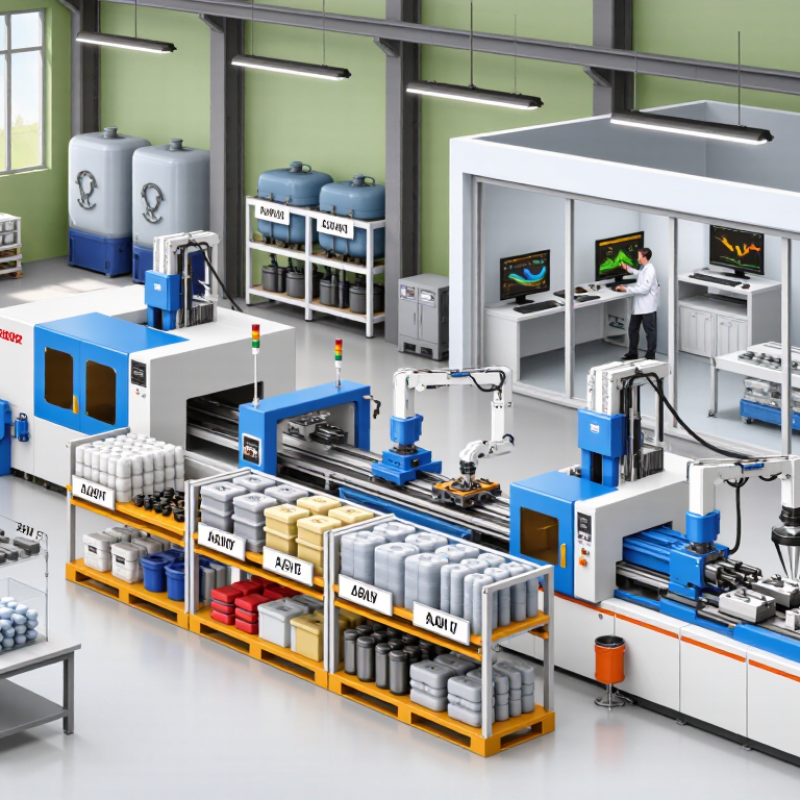
Table of Contents
[Hide]
What Defines a High-Quality Polypropylene Molding Supplier in China
A high-quality polypropylene molding supplier in China proves capability through repeatable results, not attractive brochures. Grand View Research valued the global polypropylene market at over USD 93 billion in 2023. That scale increases buyer pressure for stable output and traceable materials.
Material control starts with documented resin grades, batch records, and moisture checks. Although polypropylene absorbs little moisture, poor storage can still introduce dust, mixed pellets, or contamination. A reliable supplier should provide certificates of analysis and verify melt flow rate before production. ISO 9001 certification supports controlled processes, but certification alone is not enough.
Look closely at tooling experience. The supplier should explain mold steel, cooling channels, gate design, shrinkage allowances, and expected cycle times. Sample parts should be measured with calibrated equipment, including wall thickness, weight, dimensions, and warpage. ASTM and ISO test methods can support impact, tensile, and heat-resistance evaluations.
Ask for process data.
According to the OECD Global Plastics Outlook, global plastics production reached 460 million tonnes in 2019. This figure highlights why responsible material tracking and production efficiency matter. A capable factory should reduce scrap, separate regrind, and explain when recycled content may affect performance. Claims need evidence.
A polished audit file is not proof of consistent molding. Even experienced buyers can overlook cavity imbalance or weak packaging tests. Visiting the plant, reviewing recent inspection records, and checking corrective-action history provide stronger evidence. Delivery reliability also matters: capacity plans should show machines, operators, maintenance intervals, and realistic lead times. Small gaps remain possible. Good suppliers admit them and measure improvement.
China Best Polypropylene Molding Supplier? - What Defines a High-Quality Polypropylene Molding Supplier in China
| Evaluation Dimension | Reliable Supplier Benchmark | Relevant Standard or Evidence | Why It Matters for PP Molding |
|---|---|---|---|
| Material Traceability | Each production batch should be linked to a resin lot, material grade, supplier certificate, and molding date. | Resin lot records, certificates of analysis, incoming inspection logs, and retained samples. | PP properties such as stiffness, impact strength, shrinkage, and melt flow can vary by grade and batch. |
| Material Grade Control | The supplier should use the specified homopolymer, random copolymer, impact copolymer, filled, or reinforced PP grade without unauthorized substitution. | Approved material list, purchase records, resin packaging labels, and incoming material verification. | Different PP families have substantially different impact, transparency, rigidity, and temperature-performance characteristics. |
| Melt Flow Rate Testing | Melt flow rate should be checked against the resin grade specification using a consistent test method and test condition. | ISO 1133 or ASTM D1238 test reports; the applicable temperature and load must be stated. | Melt flow affects filling behavior, cycle settings, weld lines, packing, and final part consistency. |
| Injection Molding Equipment | Machine clamp force, shot size, injection pressure, and screw configuration should match the part size and PP grade. | Machine list, equipment specifications, preventive-maintenance records, and process-capability data. | Correct machine selection helps control short shots, flash, warpage, material degradation, and cycle stability. |
| Mold Design and Tooling | The mold design should account for PP shrinkage, gate location, venting, cooling, ejection, and expected production volume. | Mold-flow analysis where appropriate, 2D drawings, 3D data, mold trial reports, and tool-maintenance records. | PP typically has relatively high molding shrinkage, so balanced cooling and effective compensation are essential for dimensional control. |
| Dimensional Capability | Critical dimensions should be measured using calibrated instruments, with capability targets agreed for the individual drawing requirements. | CMM reports, gauge calibration certificates, first-article inspection, and Cp/Cpk studies for critical features. | PP shrinkage, cooling variation, fiber orientation, and molding conditions can influence dimensions and warpage. |
| Process Documentation | The supplier should maintain approved parameter sheets covering temperature zones, injection speed, pressure, holding time, cooling time, and cycle time. | Work instructions, setup sheets, parameter-change approvals, and production records. | Documented settings reduce variation between operators, machines, shifts, and production batches. |
| Quality Management System | A mature quality system should control purchasing, production, inspection, nonconformities, corrective actions, and customer complaints. | Current ISO 9001 certification issued by an accredited certification body and supporting audit records. | A certified and actively implemented system provides repeatable controls beyond final inspection alone. |
| Industry-Specific Compliance | The supplier should demonstrate controls appropriate to the end-use sector, such as automotive, medical, food-contact, or electrical applications. | Relevant certifications, declarations, test reports, technical files, and customer-specific compliance records. | Compliance requirements depend on the application and may include IATF 16949, ISO 13485, food-contact rules, RoHS, or REACH. |
| Product Inspection Plan | Inspection should cover appearance, critical dimensions, weight, function, assembly fit, and material or performance tests defined by the drawing. | Control plan, inspection checklist, sampling plan, inspection reports, and nonconformance records. | A balanced inspection plan detects both visible molding defects and hidden functional failures. |
| Defect Prevention | The supplier should monitor short shots, flash, sink marks, burn marks, weld lines, flow marks, warpage, contamination, and color variation. | Defect standards, approved limit samples, process audits, root-cause analysis, and corrective-action reports. | Systematic defect prevention is more reliable than sorting finished parts after unstable molding. |
| Tooling Life and Maintenance | The supplier should define mold maintenance intervals, spare-part responsibilities, cavity counts, and tool-life assumptions before production. | Preventive-maintenance schedule, mold history card, cavity inspection records, and repair-response procedure. | Mold wear can change flash, dimensions, gate quality, ejection performance, and cycle time over the tool's service life. |
| Production Capacity | Capacity should be demonstrated using available machine hours, cavity count, cycle time, planned utilization, and current loading. | Capacity calculation, production schedule, OEE records, backup-machine plan, and delivery-performance history. | A supplier may have sufficient machine tonnage but still lack practical capacity during peak demand. |
| Packaging and Logistics | Packaging should prevent deformation, contamination, moisture exposure, surface damage, and mixed-lot identification during transport. | Packaging specification, carton labels, lot identification, export documents, and shipment inspection records. | Correct packaging preserves molded-part quality and maintains traceability through international delivery. |
| Sample and Approval Process | Before mass production, the supplier should provide trial samples, dimensional data, material records, and an approved production reference sample. | First-article inspection report, approved sample, process capability results, and signed drawing or specification. | A formal approval stage reduces the risk of transferring an unverified process into full-scale production. |
| Corrective Action Response | Nonconformities should be contained quickly and investigated using documented root-cause and corrective-action methods. | 8D, CAPA, fishbone analysis, process updates, effectiveness verification, and closure evidence. | Fast, evidence-based corrective action limits recurring quality issues and protects supply continuity. |
| Sustainability and Material Efficiency | The supplier should control regrind usage, scrap segregation, energy consumption, and recycled-content claims according to the agreed specification. | Material-balance records, scrap reports, recycled-content declarations, and environmental-management documentation. | Uncontrolled regrind or recycled content can change PP appearance, strength, flow, and long-term performance. |
Related Posts
-
Top 10 Polypropylene Molding Suppliers in China 2026?
-
How to Optimize Polypropylene Molding for Better Product Quality?
-

Best Low Cost Injection Molding Solutions for Global Buyers?
-

Best Blow Molds for Crafting and Home Décor Ideas?
-
How to Choose a Plastic Injection Molding Supplier in 2026?
-

What is Rotational Molding and its Top Applications in 2026?