How to Find Reliable International Plastic Suppliers?

Finding a reliable international plastic supplier requires more than comparing prices on a website. It demands careful verification, practical questions, and patience. A polished catalog can hide weak quality control, inconsistent materials, or unclear production sources.

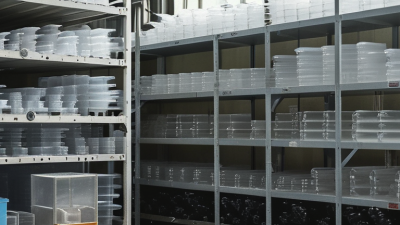
Experienced buyers usually request resin specifications, safety data sheets, batch records, and recent test reports. They also check whether certificates match the actual factory and product. A video call should show real storage areas, labeling systems, testing equipment, and finished goods. Small details matter. Ask for samples from different production batches. Compare color, strength, moisture content, and dimensional stability under controlled conditions.

Patrick Krieger, a sustainability expert at PLASTICS, has noted, “Sustainability is a journey, not a destination.” That principle applies to supplier selection. A dependable international plastic partner should explain material origins, recycling practices, quality controls, and improvement plans clearly. It should also provide transparent commercial terms, realistic lead times, and responsive technical support.

Still, no supplier is perfect. Documents can become outdated. Samples may perform better than mass production. Buyers should use written specifications, pre-shipment inspections, traceability requirements, and agreed corrective-action procedures. Regional compliance must also be reviewed for the intended application and destination market. Independent testing may add cost, but it can prevent expensive failures later.

The strongest supplier is not always the cheapest. It is the one that communicates honestly, controls variation, and accepts scrutiny. Reliable cooperation develops through evidence, repeated deliveries, and measurable performance. Trust must be earned.

How to Find Reliable International Plastic Suppliers?

Define Your Plastic Product Requirements and Supplier Criteria

Reliable international plastic sourcing starts with a precise product brief. State the polymer type, grade, color, dimensions, tolerances, and intended application. Add operating temperatures, mechanical requirements, surface finish, and expected service life. A small detail matters: a 0.2-millimeter tolerance can change tooling costs and production yield.

I once requested “high-strength black plastic” and received several unsuitable quotations. The phrase sounded clear, but it was not measurable. Define tensile strength, impact performance, flame behavior, and approved additives where relevant. Include monthly volume, trial quantity, packaging needs, delivery location, and target schedule. Attach a drawing or reference sample. Do not assume every supplier interprets technical language identically.

Supplier criteria should match the product risk. Request technical data sheets, certificates of analysis, batch traceability, and recent sample results. Check production equipment, inspection methods, quality controls, and experience with international shipments. A video audit can reveal storage conditions, labeling practices, and whether materials are protected from moisture. Ask how the supplier handles nonconforming batches and delayed deliveries. Their answer often matters more than a polished presentation.

Review compliance requirements for the destination market before approving materials. Confirm documentation through qualified specialists when the application is sensitive. Price alone is a weak filter. A cheaper resin can create rejects, mold changes, or unstable color. My own checklists have improved, but they still miss details when production teams are not involved early. Share the specification with engineering, quality, and purchasing before sending inquiries.

How to Find Reliable International Plastic Suppliers?

Define Your Plastic Product Requirements and Supplier Criteria

Material density is an important requirement when screening international plastic suppliers because it affects product weight, shipping costs, dimensional design, and quality consistency. The chart shows representative typical density values for widely used polymers.

Values are representative midpoints of commonly published material-density ranges in g/cm³. Suppliers should confirm the exact grade, specification, test method, and certificate of analysis before approval.

Search International Supplier Markets and Build a Qualified Shortlist

Finding reliable international plastic suppliers starts with comparing markets, not collecting random quotations. Plastics Europe reported global plastics production of about 413 million tonnes in 2023. That scale creates choice, but also hides uneven quality. Compare regions by resin availability, export stability, energy costs, port performance, and technical expertise. The OECD’s Global Plastics Outlook reports that only 9% of plastic waste was recycled globally in 2019. Therefore, recycled-content claims need documented evidence, not attractive wording.

Build a shortlist of five to eight suppliers. Request technical data sheets, certificates, batch records, origin details, and recent laboratory reports. Check whether their production capacity matches your monthly demand. Ask for samples from different batches. Test melt flow, moisture, color, tensile strength, and contamination levels through an independent laboratory. International shipment terms also matter. Confirm packaging, inspection points, lead times, payment stages, and responsibility for damaged cargo. A low price can become expensive after delays or rejected material.

Tips: Score each supplier across quality, traceability, capacity, communication, and total landed cost. Keep written evidence for every score. Do not trust one successful sample. It may be unusually good. I have found that slow, specific answers often reveal more than polished presentations. Review the shortlist with production and quality teams, then arrange a small trial order before expanding volume. Leave room for doubt. A supplier can pass an audit and still fail during peak demand.

Verify Supplier Credentials, Production Capacity, and Quality Systems

Reliable international plastic suppliers should prove more than they promise. Ask for company registration, ownership details, factory address, and recent audit records. Confirm that certificates match the legal entity and production site. A polished document is not enough. Call the issuing body when details seem unclear.

Production capacity needs physical evidence. Request a machine list, material storage photos, shift schedules, and recent output records. Compare monthly capacity with your forecast, not just the supplier’s maximum claim. During a factory visit, watch one order move from raw pellets to packed cartons. Check mold changes, maintenance logs, and backup equipment. Empty floors can reveal limited capacity.

Quality systems should work on ordinary days. Review incoming material checks, process inspection points, final sampling plans, and batch traceability. Ask for a sample inspection report, including dimensions, color readings, weight, and defect photos. Test samples from different production lots when possible. One perfect sample proves little. I once focused too heavily on a supplier’s laboratory and overlooked inconsistent operator records. That mistake changed my review process. Now I ask how defects are contained, recorded, and corrected. Clear corrective-action reports matter more than confident answers. Keep communication records, approve a written specification, and schedule independent inspections before shipment. Some suppliers may resist these steps. That response is useful evidence.

Compare Samples, Pricing, Shipping Terms, and Regulatory Compliance

How to Find Reliable International Plastic Suppliers?

A reliable supplier should pass more than a polished sales call. Request samples from the same production line used for bulk orders. Check thickness, color consistency, surface finish, odor, and flexibility under normal use. Keep one sample for later comparison. A perfect sample can mislead.

Ask for pricing in writing. Separate material cost, tooling, packaging, inspection, and transport charges. Compare the same quantity and specifications. Shipping terms matter. FOB, CIF, and DDP can create very different landed costs. Confirm the delivery point, insurance responsibility, customs documents, and expected transit time. A low quote may hide expensive handling fees.

Regulatory compliance needs evidence, not promises. Request current test reports, material declarations, safety data sheets, and certificates relevant to the product’s market. Requirements may involve food-contact rules, chemical restrictions, or electrical safety standards. Verify the testing laboratory and report date. A supplier should explain batch traceability and quality checks. I once focused too heavily on price and ignored inconsistent sample thickness. That mistake delayed production. My process is better now, but not perfect. Independent inspection remains worthwhile for larger orders. Ask for corrective-action records when defects appear. Silence is a warning sign.

Select, Audit, and Monitor the Most Reliable Plastic Supplier

A reliable international plastic supplier is not chosen by price alone. Start by matching material grade, production capacity, certifications, and export experience to your actual application. Ask for recent test reports, safety data, batch records, and references from comparable buyers. Request samples from normal production, not specially prepared pieces. Compare color, moisture, dimensions, odor, and mechanical performance under controlled conditions. Small differences often become costly defects.

An on-site or remote audit should examine more than a clean factory floor. Review incoming-material controls, machine maintenance, calibration logs, worker training, and nonconformance procedures. Check whether each batch can be traced from raw material to shipment. Speak with quality staff privately. Their answers may reveal operational pressure. Verify certificates with issuing bodies when possible. I once accepted a polished audit file too quickly; later, missing maintenance records raised questions. That mistake changed my review process.

After approval, monitor the supplier with measurable indicators. Track defect rates, delivery accuracy, response time, and corrective-action closure. Keep a retained sample from every shipment. Use a written change-notification rule for materials, equipment, or production sites. Review performance monthly during the first quarter, then adjust the frequency. Document everything. Keep a backup source and review your assumptions regularly. No audit predicts every failure.

How to Find Reliable International Plastic Suppliers? - Select, Audit, and Monitor the Most Reliable Plastic Supplier

Evaluation Dimension Data Point to Collect Recommended Requirement or Benchmark Verification Method Risk Level Monitoring Frequency
Legal Identity and Ownership Registered legal entity, operating address, ownership structure, export authorization, and years in operation All legal details must match government or chamber-of-commerce records; operating history should be documented Corporate registry search, business license review, address verification, and video or on-site inspection Critical At onboarding and annually
Quality Management System Quality certification, certificate scope, expiry date, nonconformity process, and quality personnel ISO 9001:2015 certification should cover the relevant manufacturing site and product scope Certificate validation with the issuing certification body, procedure review, and audit records Critical Annually and after major changes
Material Traceability Resin grade, lot number, supplier batch, production date, additive information, and retained sample system Every shipment should be traceable from finished product back to the raw-material lot and production record Review batch records, certificates of analysis, labels, inventory controls, and mock recall results Critical Every shipment; full test quarterly
Product Specification Control Dimensional tolerances, color tolerance, moisture, density, tensile strength, impact strength, and appearance limits Specifications, test methods, sampling plans, and acceptance limits must be approved before the first order Approved product specification, control plan, inspection reports, and pre-shipment samples Critical Each production lot
Regulatory Compliance Declarations, restricted-substance test reports, food-contact or medical documentation where applicable Compliance must match the destination market and intended use; EU RoHS restricts lead, mercury, hexavalent chromium, PBB, and PBDE at 0.1% by weight in homogeneous material, with lower limits for some substances Independent laboratory reports, supplier declarations, formulation review, and regulatory database checks Critical At onboarding and when formulation changes
Environmental Management Environmental certification, energy consumption, waste handling, recycled content, and emissions controls ISO 14001 certification is preferred; environmental permits and waste-transfer records must be current Certificate validation, permit review, waste records, site audit, and sustainability data review Medium Annually
Production Capacity Installed capacity, available capacity, machine list, mold capacity, shift pattern, and peak-season utilization Verified available capacity should cover forecast demand plus an agreed contingency margin Production-plan review, machine verification, capacity calculation, and historical output analysis Critical Quarterly and before demand peaks
On-Time Delivery Confirmed order date, requested delivery date, actual shipment date, delay reason, and corrective action Use a documented on-time-in-full target; a practical starting threshold is at least 95% for stable programs Purchase-order records, shipment documents, warehouse receipts, and monthly scorecards Critical Monthly
Defect and Complaint Rate Parts-per-million defects, rejected lots, customer complaints, return rate, and corrective-action closure time Set product-specific limits; every critical nonconformity should receive documented root-cause analysis and corrective action Incoming-inspection data, complaint log, 8D or equivalent reports, and trend analysis Critical Monthly; immediate escalation for critical defects
Testing and Laboratory Capability Internal equipment, calibration status, test methods, laboratory competence, and external laboratory access Measuring equipment must be calibrated; test methods must be defined and suitable for the material and application Calibration certificates, test-method review, proficiency records, and independent retesting Critical At audit and per calibration schedule
Business Continuity Backup equipment, alternate raw-material sources, emergency stock, disaster-recovery plan, and recovery time A documented continuity plan should identify critical risks, responsible personnel, alternate sources, and recovery priorities Business-continuity plan review, scenario testing, and evidence of backup arrangements Critical Annually and after major disruptions
Financial and Commercial Stability Payment terms, credit exposure, price history, tooling ownership, insurance, and contract conditions Commercial terms, tooling ownership, change notification, warranty, confidentiality, and dispute provisions must be written clearly Contract review, trade references, financial screening, and comparison with approved quotations Medium At onboarding and annually
Communication Performance Response time, escalation process, engineering support, language capability, and document accuracy The supplier should provide named contacts, a clear escalation route, and timely responses to technical and quality issues Trial-order assessment, response-time log, meeting records, and corrective-action communication review Medium Monthly scorecard
Change Management Changes to resin, additives, molds, equipment, process parameters, site, subcontractors, or packaging No material or process change should be implemented without prior written notification, risk assessment, and approval where required Engineering-change notices, revised specifications, sample approval, and first-article inspection Critical For every proposed change
Supplier Scorecard Weighted scores for quality, delivery, compliance, responsiveness, cost, and sustainability Use a documented scoring model; suppliers below the approved threshold should enter a corrective-action or requalification process Monthly or quarterly scorecard with trend charts, action owners, and closure dates High Monthly or quarterly