10 Tips to Reduce Injection Molding Cost Effectively?
Injection molding is a crucial process in manufacturing, influencing product quality and costs. One of the primary concerns for manufacturers is injection molding cost. Reducing these costs can lead to significant savings and increased competitiveness. However, cutting costs should not compromise the quality or performance of the final products.
Understanding the factors that contribute to injection molding cost is essential. Material selection, cycle time, and mold design all play vital roles. Often, manufacturers overlook the importance of optimizing these elements. It's easy to fall into the trap of choosing the cheapest materials or rushing the production process, which can backfire.
Effective cost reduction requires thoughtful strategies. Implementing advanced technologies or reconsidering production methods might seem daunting. However, small changes often yield substantial results. Striking the right balance between cost and quality is a continuous journey. Manufacturers must reflect on their processes and remain open to innovations.
Understanding the Basics of Injection Molding Cost Factors
Understanding the basics of injection molding cost factors is vital for any manufacturer. The primary components of these costs include materials, labor, machinery, and overhead. A recent industry report indicated that raw materials account for about 30-50% of production costs. Choosing the right resin is crucial. Inexpensive materials may reduce costs initially but can compromise quality.
Labor costs also vary significantly. Skilled workers typically demand higher wages. However, they can improve the efficiency of the production process. Investing in training can yield better long-term results. It's reported that labor productivity can increase by 20% when employees receive specialized training.
Machinery costs are another important aspect. The initial investment for advanced equipment can be high. Yet, newer machines often operate with greater energy efficiency. This leads to significant savings on operating costs over time. Continuous maintenance is essential. Neglecting this can result in costly downtime and repairs.
Each of these factors requires careful consideration to create a cost-effective plan. Balancing upfront expenses with long-term savings is key to optimizing injection molding processes.
Optimizing Material Selection for Cost Efficiency
One key factor in reducing injection molding costs is selecting the right materials. Not all plastics are created equal.
Choosing the correct polymer can lead to significant savings. For example, certain materials can be less expensive but may not perform as well.
This can lead to higher failure rates and increased production downtime.
Consider the application requirements carefully. High-performance materials might be tempting for their strengths.
However, they often come with a higher price tag. Understanding the end-use of the product is essential.
Sometimes, a lower-grade plastic will suffice, saving money without sacrificing quality.
It's also vital to think about the processing conditions. Materials that are easier to mold may cut costs on energy and labor.
Look for options that streamline manufacturing processes. However, don’t ignore the environmental impact.
Some cheaper materials may contribute to more waste. Balancing cost, performance, and sustainability requires thoughtful consideration.
Each choice carries implications that warrant reflection.
Streamlining the Design Process to Minimize Expenses
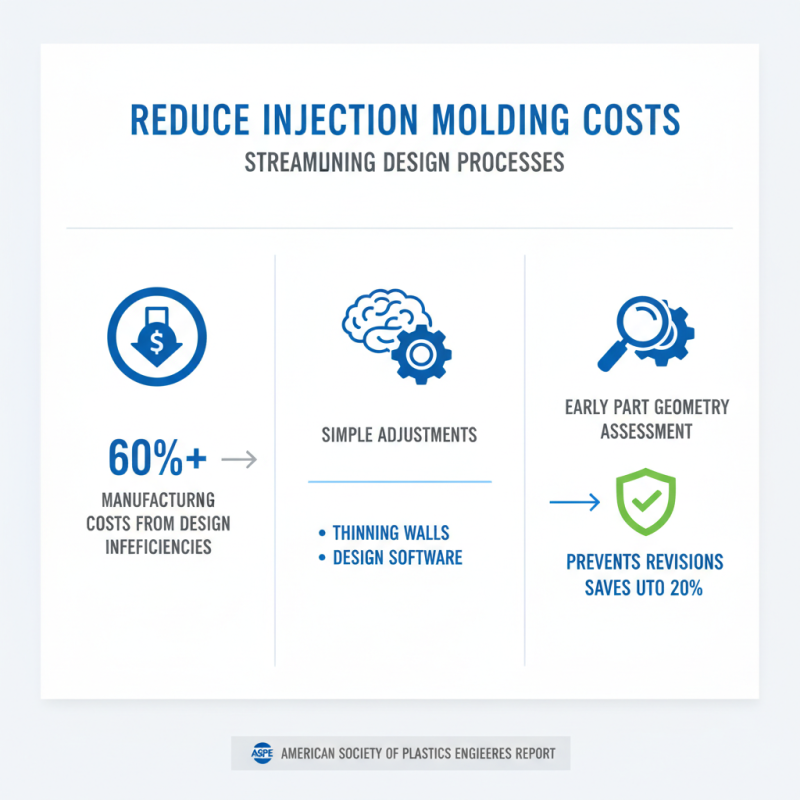
Streamlining the design process is crucial to reducing injection molding costs effectively. According to a report by the American Society of Plastics Engineers, over 60% of manufacturing costs stem from design inefficiencies. Simple adjustments, like thinning walls or using design software, can lead to significant savings. Properly assessing part geometry at the initial stage can prevent excessive revisions later, which can inflate costs by up to 20%.
Collaboration among design, engineering, and manufacturing teams can enhance the process. Regular meetings to review design concepts can address potential issues early on. A study by the Society of Manufacturing Engineers found that projects with integrated teams reduce errors by 35%. However, many companies overlook this collaborative approach, allowing miscommunication to increase expenses. Analyzing past projects can also provide insights into cost-saving design strategies.
Material selection plays a vital role in expenses. Using the right materials can minimize waste and production time. A recent industry survey revealed that companies using recycled materials saved nearly 25% on average. Yet, poor material choices can lead to defects, ultimately costing more to fix. A continuous feedback loop is necessary to assess material effectiveness and refine designs. This ongoing evaluation can uncover opportunities for further cost reduction.
Implementing Advanced Technology for Cost-Effective Production
Implementing advanced technology in injection molding can significantly reduce production costs. Automation plays a crucial role in this shift. Using robotic arms for material handling minimizes labor costs. These systems can work continuously, increasing efficiency and reducing downtime. However, the initial investment can be high. Businesses must carefully assess their budgets and projected returns.
Another valuable technology is real-time monitoring systems. These systems track mold performance and production variables. They provide instant feedback, allowing timely adjustments to reduce waste. Manufacturers can optimize processes further by utilizing data analytics. This approach identifies inefficiencies and suggests improvements. However, reliance on data can lead to overcomplication. Keeping processes manageable is essential.
3D printing is another innovative tool. It allows for rapid prototyping and can reduce design costs. While it offers flexibility, not all designs translate well for injection molding. Some companies face challenges when integrating 3D printed components into traditional workflows. Reflection on these limitations is vital to creating a balanced approach. Without thorough planning and testing, costs can escalate rather than decrease.
10 Tips to Reduce Injection Molding Cost Effectively
| Tip Number |
Tip Description |
Potential Savings (%) |
Implementation Difficulty |
| 1 |
Optimize part design for manufacturability |
15% |
Medium |
| 2 |
Utilize simulation software to predict issues |
10% |
High |
| 3 |
Choose the right material for cost efficiency |
20% |
Low |
| 4 |
Reduce cycle time through advanced cooling systems |
25% |
Medium |
| 5 |
Implement robotics for precise automation |
30% |
High |
| 6 |
Perform regular maintenance on machinery |
5% |
Low |
| 7 |
Train staff on best practices for efficiency |
10% |
Medium |
| 8 |
Invest in energy-efficient machinery |
15% |
High |
| 9 |
Reduce waste through optimized process flow |
20% |
Medium |
| 10 |
Outsource non-core processes to specialists |
10% |
Medium |
Evaluating Supplier Relationships to Reduce Overall Costs
Evaluating supplier relationships is crucial for reducing injection molding costs. A good partnership can lead to better pricing, quality, and service. Establish open lines of communication with your suppliers. Discuss your needs and expectations early on. This avoids misunderstandings later. Frequent dialogue fosters trust and can lead to cost-saving solutions.
Consider conducting regular reviews of supplier performance. Assess quality, pricing, and delivery times. If a supplier falls short, address it promptly. Sometimes, a new supplier may offer better rates or improved services. Don’t hesitate to explore these options. However, switching suppliers can be risky. Ensure any new partner can meet your requirements effectively.
Be aware that long-term contracts may lock you into prices that are not favorable as market conditions change. Negotiate flexible terms where possible. Weigh the pros and cons of loyalty against potential savings. Missed opportunities can arise if you're too comfortable. Explore alternative suppliers when costs become unmanageable.