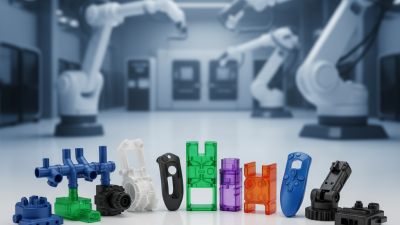
China’s medical device manufacturing sector has developed rapidly, supported by advanced tooling, skilled engineers, and expanding quality systems. This growth makes supplier selection more difficult. A polished website is not enough.
This guide examines China’s top 10 medical device injection molding manufacturers through practical criteria. These include ISO 13485 certification, cleanroom molding, material traceability, mold maintenance, process validation, and production scalability. We also consider experience with surgical instruments, diagnostic components, drug-delivery systems, and patient-contact parts. Small details matter. A flash line near a sealing surface can affect assembly, testing, and clinical reliability.
John Bozzini, a medical device manufacturing executive, has emphasized, “Quality, reliability, and speed must never come at the expense of patient safety.” That principle defines responsible medical device injection molding. The lowest quotation may not represent the lowest total cost. Tooling repairs, rejected batches, delayed validation, or weak documentation can quickly change the calculation.
The ranking should not be treated as absolute. Supplier strengths vary by polymer, product complexity, cleanroom requirements, and annual volume. Some manufacturers excel at high-volume molding. Others offer stronger engineering support or complex micro-components. Verification remains essential. Buyers should request audit records, sample parts, validation evidence, and clear change-control procedures before making a final decision.
This overview offers a practical starting point. It also leaves room for doubt. Manufacturing capabilities can change faster than published company profiles. Reliable conclusions require direct technical discussions and current factory evidence.
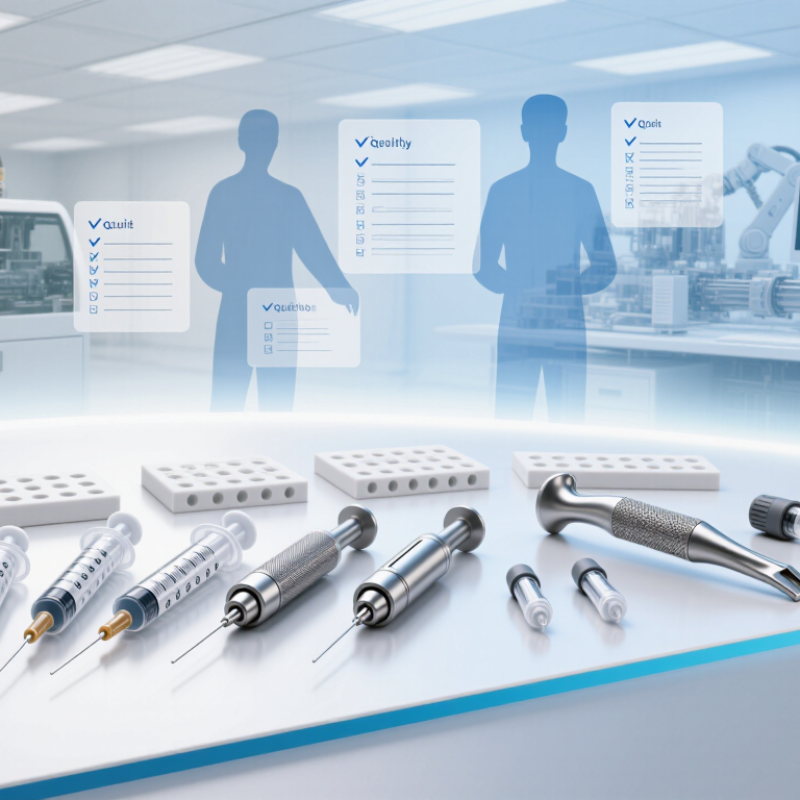
Medical device injection molding creates precise plastic components through controlled heat, pressure, and cooling. These parts include syringe bodies, diagnostic housings, fluid connectors, and surgical instrument components. Their role is practical, not decorative. A small dimensional error can affect sealing, fluid flow, or assembly.
According to Fortune Business Insights’ 2024 report, the global medical injection molding market was valued at approximately US$23.13 billion in 2024. The report projects continued growth through 2032, driven by diagnostic devices, disposable products, and minimally invasive procedures. China supports this expansion through tooling, automation, material processing, and large-scale production. However, volume alone does not prove quality. Manufacturers need documented process validation, controlled cleanroom conditions, resin traceability, and inspection records. ISO 13485-based quality systems are widely used for medical device manufacturing. A mold may produce attractive parts yet still fail under sterilization or repeated assembly. That risk deserves more attention.
Tips
Confirm resin compatibility with the intended sterilization method. Check cavity balance, flash limits, and critical dimensions early. Request material certificates and lot-level traceability. Do not select a supplier by price alone. A cheaper mold can create expensive corrections later. In practice, some design reviews remain too optimistic. Engineers should test real production conditions, not only perfect laboratory samples.
Choosing among China’s top medical device injection molding manufacturers requires more than comparing prices. Start with evidence of regulated production experience, not polished brochures. Ask for recent project records involving housings, fluid paths, or surgical components. Confirm material traceability from resin lot to finished batch. A capable supplier should explain mold validation, process qualification, and change control in practical terms. Vague answers are warning signs.
Quality systems deserve close inspection. Review certifications, audit reports, complaint handling, and corrective-action records. Do they measure critical dimensions with calibrated equipment? Can they provide first-article reports and statistical process data? Walk through the cleanroom, if possible. Look for controlled gowning, documented environmental monitoring, and clear separation of rejected parts. Small details matter. Yet certificates alone do not prove reliable performance. A recurring industry lesson is that technically strong factories may struggle with documentation during rapid growth. Test that weakness before approval.
Evaluate engineering depth through a design-for-manufacturing review. The team should discuss wall thickness, draft angles, weld lines, shrinkage, and sterilization effects. Request sample parts, mold-flow analysis, and a pilot-run plan with measurable acceptance criteria. Communication is another practical test. Are technical questions answered by engineers, or passed between sales contacts? Confirm capacity, maintenance schedules, backup equipment, and supply continuity. A factory may promise ten-day tooling, but the real question is whether it can repeat the result safely. Document what still needs verification.
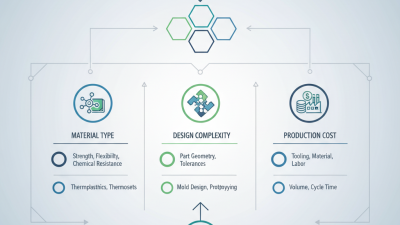
This weighted evaluation framework focuses on measurable capabilities commonly used when selecting medical device injection molding suppliers. It does not rank or disclose individual companies or brands.
The weighting totals 100 points and can be adapted to the device class, regulatory market, material requirements, and production volume.
China’s Top 10 Medical Device Injection Molding Manufacturers should be evaluated by capability, not factory size alone. A strong supplier controls mold design, validated processing, cleanroom assembly, and traceability. It should also provide material certificates, inspection records, and documented change control. Small details matter. Flash around a connector, unstable wall thickness, or unclear resin storage can create serious risks in a finished device.
Fortune Business Insights reported that the global medical injection molding market was valued at approximately US$22 billion in 2023, with growth expected through 2032. This expansion reflects rising demand for disposable components, diagnostic housings, surgical instruments, and drug-delivery parts. China’s leading ten manufacturers compete within this growing supply chain by offering multi-cavity tooling, automated inspection, and production environments aligned with ISO 13485 quality systems. Their practical value is measured through repeatability, not impressive equipment lists.
Buyers should request capability studies, process-validation evidence, and sample dimensional reports before approving a supplier. The ISO 13485 certificate helps, but it does not prove stable molding performance. That distinction is often overlooked. According to the International Organization for Standardization, risk-based thinking and controlled processes remain central to medical-device quality management. A reliable Chinese manufacturer should explain how it handles tool wear, particulate control, operator training, and corrective actions. Rankings can guide research, yet they are never perfectly objective. Production evidence deserves more weight than promotional claims.
| Rank | Anonymized Manufacturer Profile | Primary Medical Applications | Injection Molding Capabilities | Common Medical-Grade Materials | Controlled Manufacturing Environment | Quality & Validation Practices | Typical Production Services |
|---|---|---|---|---|---|---|---|
| 1 | Manufacturer Profile 01 | Syringe components, diagnostic housings, fluid-management parts | High-precision multi-cavity molding, insert molding, tight-tolerance components | PP, PE, PC, ABS, COC, medical-grade elastomers | ISO 14644-class controlled rooms according to product risk and process requirements | ISO 13485-based quality management, IQ/OQ/PQ, process validation, traceability | Tool design, mold qualification, molding, inspection, packaging support |
| 2 | Manufacturer Profile 02 | Diagnostic consumables, test cartridges, laboratory disposables | Micro molding, thin-wall molding, hot-runner systems, automated demolding | PP, PS, PC, PMMA, COC, cyclic olefin polymer | Particle-controlled production areas with documented environmental monitoring | Dimensional inspection, visual inspection, material certification, lot control | Prototype tooling, pilot runs, serial production, assembly and labeling coordination |
| 3 | Manufacturer Profile 03 | Infusion components, connectors, valves, blood-management products | Two-shot molding, overmolding, clean molding, automated visual inspection | PP, POM, PC, TPU, TPE, medical-grade PVC alternatives | Controlled molding and assembly areas selected for contamination sensitivity | Design-for-manufacturing review, mold-flow analysis, capability studies, change control | Mold maintenance, molding, secondary assembly, leak testing, functional testing |
| 4 | Manufacturer Profile 04 | Surgical instruments, orthopedic components, device handles | Engineering thermoplastic molding, insert molding, reinforced-resin processing | PA, PEEK, PC, PPSU, PEI, glass-filled engineering polymers | Controlled production zones with documented temperature and humidity monitoring | Material drying control, dimensional validation, sterilization compatibility review | Tooling engineering, process development, machining coordination, assembly support |
| 5 | Manufacturer Profile 05 | Respiratory parts, inhaler components, anesthesia accessories | Precision molding, gas-assist options, insert molding, automated inspection | PP, PC, ABS, POM, TPE, silicone-compatible substrates | Clean production and assembly areas based on contamination-control requirements | Air-leak testing, dimensional verification, process monitoring, batch traceability | Mold trials, production molding, component testing, packaging preparation |
| 6 | Manufacturer Profile 06 | Wound-care devices, drug-delivery components, disposable applicators | Small-part molding, overmolding, automated take-out, cavity-pressure monitoring | PP, PE, PC, TPU, TPE, medical-grade nylon | Controlled molding and assembly environments with gowning procedures | Risk-based inspection plans, validation protocols, nonconformance control | Prototype-to-production transition, assembly, testing, kitting support |
| 7 | Manufacturer Profile 07 | Electronic medical-device enclosures and wearable-device parts | Large-part molding, textured surfaces, insert molding, ultrasonic-welding support | ABS, PC/ABS, PC, PA, PBT, flame-retardant engineering resins | Controlled manufacturing areas with ESD and cleanliness measures where required | First-article inspection, RoHS/REACH documentation, dimensional reports, traceability | Tooling, molding, pad printing or marking coordination, assembly and testing |
| 8 | Manufacturer Profile 08 | Dental components, orthodontic accessories, imaging-device parts | High-gloss molding, micro features, multi-cavity tooling, insert molding | PC, POM, PMMA, PEEK, PPSU, medical-grade polyamide | Controlled molding areas with defined cleaning and inspection procedures | Surface-quality inspection, dimensional control, material and process records | Design optimization, mold fabrication, production molding, secondary finishing |
| 9 | Manufacturer Profile 09 | Laboratory automation parts, sample vessels, pipette and handling components | Thin-wall molding, high-speed molding, automated packaging, vision inspection | PP, PS, PC, PE, POM, cyclic olefin polymer | Clean and particle-controlled areas according to laboratory-product requirements | Dimensional sampling, optical inspection, batch records, equipment calibration | High-volume molding, automated inspection, bagging, labeling and kitting |
| 10 | Manufacturer Profile 10 | General disposable devices, protective covers, medical equipment accessories | Standard and precision molding, insert molding, low- to medium-volume production | PP, PE, ABS, PC, PVC alternatives, TPE | Dedicated clean zones or controlled areas selected according to application risk | Incoming inspection, in-process checks, final inspection, corrective-action systems | Mold trial, production molding, assembly, packaging and export documentation |
Note: Manufacturer names and brand-specific commercial data are intentionally omitted. Capability descriptions reflect commonly used medical injection-molding practices and should be verified directly with each supplier before procurement.
Evaluating China’s top medical device injection molding manufacturers requires more than comparing equipment lists. The strongest suppliers show how experience becomes controlled, repeatable production. Their teams should document mold-flow studies, resin selection, gate design, and shrinkage risks before tooling begins. A cleanroom may contain stainless-steel benches, particle counters, and temperature logs updated during every shift. Small details matter.
Certification is useful, but its evidence matters more. Look for an active ISO 13485 quality management system, supported by trained auditors and traceable corrective actions. ISO 14644 cleanroom classification can support contamination control, while material certificates confirm resin identity and lot history. Manufacturers should validate molding parameters through installation, operational, and performance qualification. They also need first-article inspection, dimensional reports, and documented change control. A certificate alone proves little without records. Certifications do not replace product-specific regulatory approval.
Reliable production includes visual checks where risk justifies them, automated measurement for critical dimensions, and sealed packaging. Teams should test flash, short shots, weld lines, and part warpage under defined sampling plans. Supplier audits should examine calibration labels, operator training, complaint response, and batch traceability. No factory is perfect. An honest manufacturer reports deviations, investigates root causes, and verifies corrective action instead of hiding weak data. Buyers should also review production capacity, backup tooling plans, and communication during design changes. That area is often underestimated.
Selecting a suitable medical injection molding partner in China requires more than reviewing a “Top 10” ranking. Rankings may show market visibility, but they rarely reveal daily quality discipline. Evaluate the supplier’s experience with medical components, especially thin-wall parts, transparent housings, or tight-tolerance connectors. Ask for relevant project examples, process records, and customer references. A convincing answer should include measurable details, not broad promises.
Check whether the facility operates under a documented medical quality system, such as ISO 13485, and whether its cleanroom controls match your product risk. Review material certificates, mold maintenance logs, inspection plans, and lot traceability. The supplier should explain validation for molding, assembly, packaging, and process changes. Capability studies and dimensional reports are useful. So are controlled samples.
Visit the factory if possible. Observe resin storage, humidity control, operator training, and the path from molding to inspection. Discuss design-for-manufacturing before cutting steel. A skilled partner may identify sink marks, weld lines, or difficult ejection points early. That can prevent expensive revisions. However, technical confidence is not enough. Communication speed, change control, backup equipment, and realistic production capacity matter equally.
I have learned that a clean showroom proves little. Documentation can look complete while shop-floor habits remain inconsistent. Run a small pilot order and compare actual results with promised controls. Leave room for doubt. The right partner welcomes detailed questions, admits limitations, and improves its process when evidence exposes a weakness.