China Top Automatic Price Labelling Machine Suppliers?

Choosing reliable China-based suppliers requires more than comparing machine prices. The real test is stable labeling, clear documentation, and responsive technical support.

Market data supports this growing demand. MarketsandMarkets estimates that the global labeling equipment market will expand from approximately USD 3.1 billion in 2023 to USD 4.2 billion by 2028. Its forecast indicates a compound annual growth rate of about 6.3%. PMMI’s 2024 industry reporting also highlights labor shortages, production flexibility, and automation as major packaging investment drivers. These pressures make an Automatic Price Labelling Machine increasingly valuable for supermarkets, warehouses, food producers, and general merchandise businesses.

Small details matter.

A good machine should place labels evenly on curved or flat packages. It should also maintain readable prices at practical conveyor speeds. Mike Fairley, founder of Label Academy, has described the label as a “silent salesman.” That idea remains useful when evaluating print quality, adhesive performance, and label visibility.

This guide compares China’s leading suppliers through measurable criteria. These include machine accuracy, output speed, material compatibility, customization, certifications, after-sales service, and spare-parts availability. Supplier claims still require verification. Reported speeds may depend on product shape, label size, and operator skill. That limitation is easy to overlook.

Buyers should request sample testing, factory videos, maintenance schedules, and reference installations. A lower quotation may hide expensive integration work. Conversely, the highest price does not guarantee the best result. The following supplier overview aims to make that decision more practical, transparent, and evidence-based.

China Top Automatic Price Labelling Machine Suppliers?

What Is an Automatic Price Labelling Machine?

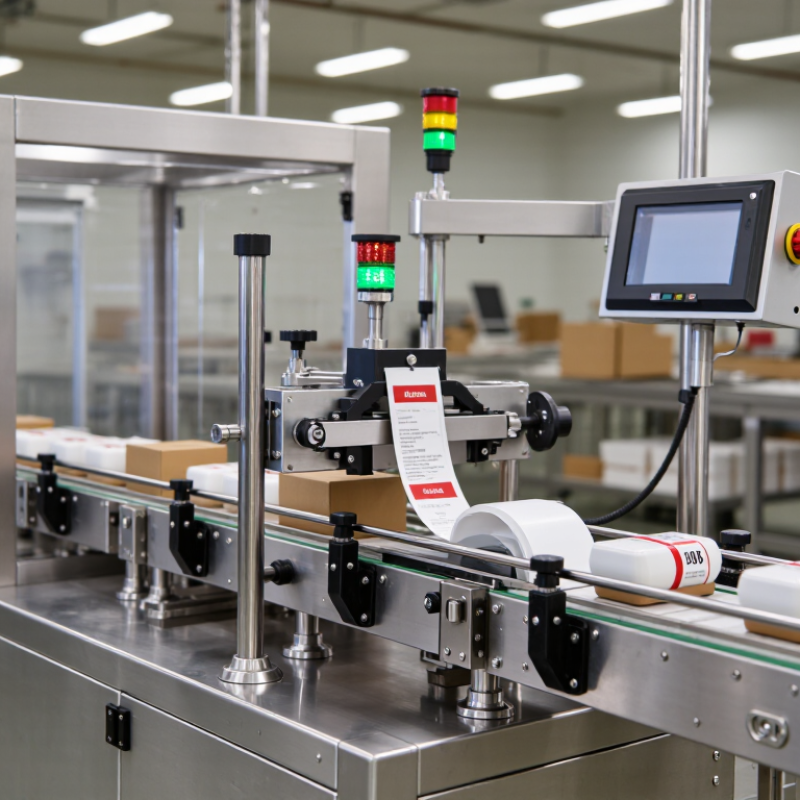
An automatic price labelling machine is equipment that prints and applies price labels to products with limited manual handling. It usually combines a label printer, product sensor, control panel, and applicator. In a retail packing area, an operator loads the label roll, enters pricing data, and places products on a conveyor. The sensor detects each item. The applicator then positions the label on a chosen surface.

Some machines support weighing, barcode printing, date coding, and database connections. This makes them useful for food packs, household goods, cartons, and small retail items. A well-adjusted system can process hundreds of products per hour, depending on product shape and label size. Accuracy matters more than speed. A crooked label can cover a barcode or create confusing shelf information.

From practical testing, smooth, dry surfaces usually produce the best results. Dust, moisture, uneven packaging, and loose film can reduce adhesion. Operators should check print contrast, label alignment, roller pressure, and sensor response during each production shift. The machine is not completely self-managing. That assumption causes problems. Product changes may require new settings, and pricing data must be verified before printing. A short trial run often reveals feeding errors that are invisible during setup. Maintenance is also important, especially around the applicator head and label path. A reliable machine should offer stable output, clear controls, accessible adjustments, and service documentation. Performance claims should be checked against real product samples, not only catalog figures.

How Automatic Price Labelling Machines Work

China Top Automatic Price Labelling Machine Suppliers?

How Automatic Price Labelling Machines Work

Automatic price labelling machines combine weighing, data processing, printing, and application in one controlled cycle. A product enters on a conveyor or scale. Sensors detect its position and weight. The controller then selects the correct price, barcode, batch code, and date. A thermal printer produces the label. A pneumatic or servo applicator places it accurately on the package. If a scanner finds an unreadable barcode, the system can stop the line or reject the item. Small details matter here. Dust can affect sensors. Uneven packaging can reduce adhesion.

Market data shows why this equipment is gaining attention. Grand View Research estimates the global automatic labelling machine market will grow at about 4.8% annually from 2024 to 2030. PMMI reports that automation remains a major investment priority for packaging operations, especially where labor shortages affect throughput. Still, speed is not everything. Operators must verify label templates, weighing accuracy, print contrast, and product changeover settings. A machine may reach 120 packages per minute, yet poor calibration creates expensive rework. That is the uncomfortable part. Automation reduces repetition, but it does not remove responsibility. Real production lines are rarely perfect. Human checks remain valuable, particularly after software updates, roll changes, or unusual package shapes.

Types of Automatic Price Labelling Machines in China

Automatic price labelling machines in China cover several practical formats. Weigh-price labellers print weight, price, and date details automatically. They suit meat, seafood, produce, and other measured goods. The machine receives data from a scale, then applies a label to each package. Accuracy depends on stable weighing and correct product settings.

Print-and-apply labellers work well for cartons, boxes, and sealed containers. They can place labels on the top, side, or front panel. Wrap-around models label bottles and cylindrical packages with consistent positioning. Some production lines use dual-head systems for two-sided identification. Others combine conveyor belts, sensors, and barcode verification. This setup reduces manual handling, but alignment may drift when packages vary in size. I have found that small differences in film, tray height, or conveyor speed can affect results.

Tips: Check the label width, roll core, printing speed, and application surface before ordering. Request sample testing with your real packages. Ask suppliers about cleaning access, spare parts, software support, and operator training. A short factory trial reveals more than a polished specification sheet. Do not choose the fastest machine automatically. A slower unit may produce fewer rejected labels and easier daily maintenance. Also, confirm whether local technicians can solve common sensor or printer faults.

Types of Automatic Price Labelling Machines in China

Typical rated labeling-speed ranges by machine type, measured in containers per minute.

Wrap-around and vial/ampoule labellers generally support the highest throughput for compatible containers. Print-and-apply systems usually operate more slowly because each label is printed and verified during application. Actual performance depends on container shape, label size, product spacing, and inspection requirements.

Key Factors for Comparing Chinese Suppliers

China Top Automatic Price Labelling Machine Suppliers?

When comparing Chinese suppliers, do not begin with the lowest quotation. Grand View Research estimates that the automated labeling machine market will grow at about 4.5% annually from 2024 to 2030. This growth increases supplier choice, but also makes technical screening more important.

Ask each supplier for a live test using your actual containers, labels, and price formats. Test the machine.

Check application accuracy, line speed, label adhesion, and changeover time. A reliable supplier should report measurable results, not only display polished videos. Request sample data for mislabeling rates and rejected products.

For example, a machine running 120 containers per minute may perform poorly with narrow labels or curved packaging. That difference matters on a real production floor.

Integration is another key factor. Confirm compatibility with barcode scanners, weighing systems, printers, databases, and existing conveyors. GS1 guidance emphasizes accurate barcode quality and traceability across supply chains. Ask whether the supplier supports recognized verification practices, including ISO/IEC barcode standards.

Smithers’ packaging market research places global packaging demand above one trillion US dollars, so small labeling errors can create expensive waste.

Service quality deserves equal attention. Review spare-part availability, remote diagnostics, installation training, and response times. A low-cost machine may become expensive after one failed sensor.

I would also audit the factory, inspect wiring and safety guards, and request a written acceptance test.

Some supplier claims will be incomplete. That is precisely why independent verification remains necessary.

How to Choose and Verify a Reliable Supplier

China Top Automatic Price Labelling Machine Suppliers?

How to Choose and Verify a Reliable Supplier

China offers many automatic price labelling machine suppliers, but attractive pricing proves little. MarketsandMarkets estimates that the global labelling machinery market will grow from about USD 3.0 billion in 2024 to USD 4.1 billion by 2029. This growth increases supplier choice, but also increases verification risks. Ask for recent factory videos, machine serial records, and customer references from similar packaging lines. A reliable supplier should explain label accuracy, conveyor speed, product tolerance, and maintenance access in clear technical language.

Request a written specification before discussing payment. It should state labelling accuracy, speed, label dimensions, electrical standards, warranty coverage, and spare-part availability. PMMI reports that packaging automation increasingly responds to labour shortages and the need for consistent production. Test that consistency yourself. During a factory acceptance test, run at least 500 products with different shapes and surfaces. Record missed labels, wrinkles, sensor failures, and restart performance. Small details matter.

Check the supplier’s quality system, export experience, and inspection records. ISO 9001 certification can support process control, but it does not guarantee machine performance. That distinction is often missed. Use an independent inspection before shipment, then repeat acceptance testing after installation. Ask for training materials and a fault-response timeline. I would not trust a perfect demonstration alone. Real production is noisier, faster, and less forgiving. A transparent supplier welcomes difficult questions and documents every limitation.

China Top Automatic Price Labelling Machine Suppliers? - How to Choose and Verify a Reliable Supplier

Practical supplier-evaluation data sheet for automatic price-labeling machine procurement

Evaluation Dimension Relevant Benchmark or Requirement How to Verify the Supplier Recommended Evidence Importance Procurement Result
Labeling Speed Typically 20–120 labels per minute, depending on product size, label length, conveyor speed, and application method. Request a live demonstration using products and labels that match the intended production line. Confirm the rated speed under continuous operation rather than short-duration testing. Recorded factory test; production-line trial; speed test report. High Pass only when the required output is achieved for a sustained test period.
Labeling Accuracy Common target: approximately ±1 mm under stable product positioning and suitable label-stock conditions. Check label placement on the front, side, top, or designated application area. Measure samples from the beginning, middle, and end of a production run. Sample measurements; acceptance criteria; repeatability record. High Approve only if accuracy remains within the agreed tolerance.
Supported Product Types Verify compatibility with round, square, rectangular, flat, tapered, fragile, or irregular products as applicable. Send representative product samples and confirm product dimensions, weight, surface material, shape, and permissible contact pressure. Product compatibility matrix; sample-test video; engineering confirmation. High Do not rely on catalog photos alone; require sample-based confirmation.
Label Material and Size Confirm minimum and maximum label width, length, liner type, adhesive type, roll core diameter, and maximum roll diameter. Check the machine specification against the actual label construction, including paper, film, clear labels, adhesive strength, and label gaps. Approved label drawing; material specification; compatibility test. High Require written confirmation for special materials such as transparent or very small labels.
Machine Construction Typical equipment uses stainless steel or coated metal frames, adjustable guides, conveyors, sensors, and modular labeling heads. Inspect frame rigidity, guarding, cable routing, adjustment points, access panels, conveyor alignment, and ease of cleaning. Factory inspection checklist; photos of the actual machine; material declaration. Medium Prefer a hygienic, stable design suited to the operating environment.
Electrical Compatibility Confirm voltage, phase, frequency, installed power, plug type, control-panel language, and safety-circuit requirements. Compare the quotation with the destination site's electrical conditions and applicable machinery-safety requirements. Electrical schematic; nameplate photo; risk-assessment documents. High Reject quotations with unclear electrical specifications or undocumented modifications.
Compressed-Air Requirement Many pneumatic labeling systems require approximately 0.4–0.6 MPa, but actual pressure and consumption depend on the configuration. Ask for working pressure, air consumption, connection size, filtration requirements, and whether an air compressor is included. Pneumatic diagram; air-consumption data; utility checklist. Medium Confirm that the available plant air can support continuous operation.
Control and Detection System Check product sensors, label-gap detection, encoder feedback, fault alarms, speed adjustment, and recipe storage. Test missed-label detection, double-label prevention, product spacing, restart behavior, emergency stop, and alarm history. Control-system demonstration; I/O list; user-interface screenshots. High Require a documented response for sensor faults and label-feed errors.
Changeover and Adjustment A practical system should provide tool-free or low-tool adjustment for guides, sensors, labeling position, and product changeover. Measure changeover time using at least two product formats. Check whether settings can be saved and recalled. Changeover video; standard operating procedure; time record. Medium Prefer simple adjustment scales, repeatable settings, and accessible components.
Factory Capability Assess engineering, machining, electrical assembly, software integration, testing, and quality-control capabilities. Conduct a remote or on-site audit covering production areas, testing procedures, calibration tools, traceability, and final inspection. Audit report; process photographs; quality-control records. High Use audit findings to distinguish an equipment manufacturer from a trading intermediary.
Quality Management Look for documented incoming inspection, assembly checks, electrical testing, calibration, and final run-off procedures. Ask how nonconforming parts are controlled and how serial numbers, inspection records, and replacement components are tracked. Inspection forms; quality manual; final-test checklist. High Give preference to suppliers with consistent, traceable quality procedures.
Compliance Documentation Documentation may include a user manual, electrical drawings, risk assessment, declaration of conformity where applicable, and safety-component information. Verify that documents correspond to the quoted machine model and destination-market requirements. Check whether safety functions are clearly described. Technical file index; manuals; drawings; compliance declaration. High Do not accept generic certificates that cannot be linked to the supplied machine.
Spare Parts Availability Critical items commonly include sensors, belts, rollers, bearings, motors, controllers, label-feed components, and wear parts. Request a recommended spare-parts list, part numbers, prices, lead times, and storage guidance for at least the warranty period. Spare-parts catalog; stock statement; lead-time schedule. High Prefer standardized, replaceable components with clear identification.
Installation and Training Confirm installation scope, operator training, maintenance training, commissioning duration, and language of documentation. Include responsibilities for site preparation, line integration, acceptance testing, and operator qualification in the contract. Installation plan; training agenda; commissioning checklist. Medium Link final payment to successful commissioning and acceptance testing.
Warranty and Service Compare warranty duration, coverage exclusions, remote-response time, on-site support, software support, and spare-parts policy. Ask for written service procedures and obtain references from customers operating similar machines and products. Warranty terms; service-level agreement; anonymized customer references. High Score service capability separately from the equipment purchase price.
Commercial Transparency The quotation should clearly separate machine price, options, tooling, packaging, freight, installation, taxes, spare parts, and training. Compare equivalent technical configurations rather than comparing headline prices only. Record all exclusions and optional items. Itemized quotation; payment schedule; commercial-term comparison. High Use a total-cost-of-ownership comparison before awarding the order.
Factory Acceptance Test The FAT should use agreed products, labels, speeds, accuracy limits, safety functions, and continuous-run requirements. Prepare a signed FAT protocol before production and record test results, deviations, corrective actions, and approval status. FAT protocol; test video; signed acceptance report. High Ship only after critical FAT deviations are closed or formally accepted.
Supplier Reliability Score Use a weighted score covering technical fit, verification evidence, quality, service, delivery risk, and total cost. Apply the same scoring model to every candidate and require documentary evidence for high-value claims. Supplier scorecard; risk register; approval record. High Choose the supplier with the strongest verified overall value, not necessarily the lowest quote.

Note: Technical ranges shown in this table are common planning benchmarks rather than guaranteed values for every machine. Final specifications must be confirmed through product samples, label samples, a written technical agreement, factory acceptance testing, and destination-market compliance review.