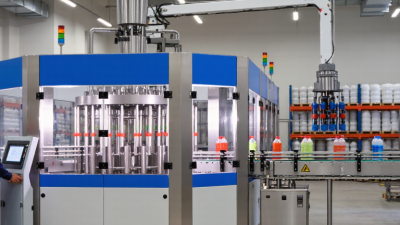
Choosing the right blow molding machine in 2026 requires more than comparing purchase prices. Global buyers must evaluate output, material use, automation, energy demand, maintenance access, and local technical support. A machine that performs well in a European plant may struggle with unstable power or limited service capacity elsewhere.
Industry data shows why this decision matters. Grand View Research projects continued growth in the global blow molding machine market, supported by rising demand for lightweight packaging, automotive components, and industrial containers. Smithers also reports that packaging producers face growing pressure to reduce plastic weight while maintaining strength and shelf life. These trends are pushing manufacturers toward servo-driven systems, faster mold changes, recycled-content processing, and more precise process control. The numbers are useful. They are not the whole answer.
This guide examines the main machine types, including extrusion blow molding, injection blow molding, and injection stretch blow molding. Each technology creates a different balance between speed, wall-thickness control, container quality, and investment cost. Extrusion systems suit many bottles, drums, and technical parts. Injection stretch systems can deliver clear PET containers with strong orientation and consistent dimensions. Yet real performance depends on resin quality, operator skill, mold design, and production conditions. Buyers should request verified cycle-time data, energy measurements, sample testing, and references from comparable factories. A glossy specification sheet can hide practical weaknesses. Careful evaluation remains essential.
2026 Best Blow Molding Machine Types for Global Buyers
Blow molding machines form hollow plastic products by expanding heated plastic inside a mold. The process resembles inflating a soft tube against a shaped metal wall. Air pressure creates bottles, containers, drums, and technical parts with consistent outer surfaces.
Extrusion blow molding suits many bottles and industrial containers. A heated plastic tube, called a parison, hangs between open mold halves. The mold closes, compressed air expands the tube, and cooling solidifies the shape. Injection blow molding offers accurate necks and clean dimensions. It works well for smaller containers and medical packaging. Stretch blow molding adds controlled stretching before air expansion. This improves strength and clarity in beverage bottles. Each type has limits. A machine that performs well for one resin may waste material with another.
Tips: Check the product volume, neck accuracy, resin behavior, cycle time, and available power before choosing equipment. Ask for sample testing with your real material. Review mold-change time, cooling capacity, safety guarding, and local service access. These details often matter more than maximum machine speed. Do not trust speed figures alone. Factory conditions can reduce them. A practical evaluation should compare scrap rates, energy use, operator training, and maintenance access. Small design changes may improve output, but they can also complicate mold costs. Careful testing is still necessary.
What Blow Molding Machines Are and How They Shape Plastic Products
Blow molding machines form hollow plastic products by shaping a heated polymer tube or preform inside a mold. The chart shows indicative product-volume ranges commonly associated with major machine types; actual capacity depends on polymer, mold design, bottle geometry, cooling time, and machine configuration.
2026 Best Blow Molding Machine Types for Global Buyers
How Blow Molding Machines Are Classified by Process and Application
Blow molding machines are mainly classified by their forming process. Extrusion blow molding creates a hot plastic tube, called a parison, before air expands it inside a mold. This process suits bottles, jerry cans, drums, and irregular containers. Injection blow molding forms a preform first, then blows it into the final shape. It offers accurate neck finishes and stable dimensions for smaller packaging.
Injection stretch blow molding adds controlled stretching to improve strength and transparency. It is widely used for beverage bottles and lightweight containers. Reheat stretch systems warm prepared preforms before blowing, while one-stage systems complete preform production and blowing within one machine. The choice affects floor space, output, energy use, and operator training.
Application classification is equally important. Food packaging requires cleanable surfaces, consistent wall thickness, and dependable sealing. Household chemical containers may need thicker handles and stronger impact resistance. Industrial packaging demands mold durability and repeatable cycle control. I have seen buyers select machines by maximum volume alone, then struggle with neck accuracy and cooling time. That approach needs reconsideration. No classification is perfect. Material behavior, mold design, local electricity, maintenance skills, and shipment distance must be reviewed together before purchase. A practical trial using the real resin and container design remains more reliable than a brochure specification.
Key Blow Molding Machine Types for Global Buyers in 2026
Global buyers will compare more than machine price in 2026. PlasticsEurope reported 413.8 million tonnes of global plastics production in 2023. That scale keeps bottle and container manufacturing highly competitive. Extrusion blow molding suits HDPE, PP, and multilayer containers, especially when buyers need flexible shapes and high output. It commonly serves packaging, household, and industrial applications.
Injection blow molding offers accurate neck finishes and clean container walls. It fits small pharmaceutical, cosmetic, and specialty packaging. Injection stretch blow molding remains important for lightweight PET bottles, where clarity and material savings matter. Large-part buyers may prefer accumulator-head extrusion machines for drums, tanks, and technical hollow components. Continuous extrusion systems can support steady production, but they may create more setup waste during color changes.
PMMI’s packaging industry reports continue to identify automation, labor efficiency, and sustainable materials as major investment drivers. Machine selection should therefore include servo control, resin compatibility, energy use, and local technical support. Ask for verified cycle data, not attractive brochure figures. The cheapest machine can become expensive.
In practice, recycled-content processing may require stronger drying, filtration, and process control. The assumption that every recycled resin runs easily is unsafe. A factory trial with the intended mold and material remains essential. Global buyers should also check electrical standards, spare-part availability, operator training, and measurable energy consumption before signing a purchase contract.
2026 Best Blow Molding Machine Types for Global Buyers
Matching a blow molding machine to the material prevents costly production mistakes. Extrusion blow molding suits HDPE, PP, and many multilayer containers. It works well for bottles, jerry cans, ducts, and irregular hollow parts. An accumulator head helps manage larger containers and thicker parisons. For small bottles, injection blow molding can deliver accurate necks and consistent dimensions. It is often suitable for PET, PP, and medical-style packaging applications.
Product details matter as much as resin selection. PET bottles usually need stretch blow molding for strength, clarity, and lightweight walls. A narrow neck may require precise preform handling and controlled heating. Wide openings, handles, or built-in layers can favor extrusion equipment instead. Check the target volume, wall thickness, annual output, mold-change frequency, and cooling time. Do not judge capacity from cycle time alone. Scrap rates can change the real cost.
In production trials, I measure parison stability, part weight, leakage, and surface defects. Small temperature shifts may create visible thinning near corners. This is easy to overlook. Recycled content also needs testing because moisture and viscosity can vary between batches. A machine that performs well with virgin resin may need stronger drying, filtration, or process control. There is no perfect selection chart. Pilot trials remain valuable, although they require time, material, and honest review of failed samples.
| Machine Type | Primary Process | Suitable Materials | Typical Product Size or Volume | Typical Output Range | Best-Matched Products | Main Advantages | Key Limitations | Recommended Buyer Profile |
|---|---|---|---|---|---|---|---|---|
| Continuous Extrusion Blow Molding | A thermoplastic parison is continuously extruded and captured in a mold before air inflation. | HDPE LDPE PP PVC EVA | Approximately 50 ml to 30 L; larger customized containers are possible. | About 200 to 2,000 containers per hour, depending on cavities, size, and cycle time. | Household bottles, lubricant containers, jerry cans, small tanks, toys, and industrial packaging. | Flexible production, broad material compatibility, comparatively simple mold changes, and good suitability for hollow products with handles. | Parison programming and wall-thickness control may be less precise than injection-based processes. Flash trimming may be required. | General-purpose packaging producers and manufacturers requiring multiple container sizes. |
| Accumulator-Head Extrusion Blow Molding | A measured shot of molten polymer is accumulated and released rapidly into a mold as a large parison. | HDPE PP ABS PC PA | Approximately 5 L to 5,000 L, depending on the head, mold, and machine structure. | About 10 to 120 units per hour for large containers; smaller products can run faster. | Large drums, water tanks, pallets, automotive ducts, industrial containers, and refuse bins. | Handles high shot weights, large molds, thick walls, and complex industrial hollow parts. | Higher capital and energy requirements; generally slower than high-speed small-bottle systems. | Industrial packaging and large-part producers prioritizing capacity and structural strength. |
| Injection Blow Molding | A preform is injection molded around a core, transferred to a blow mold, and inflated to final shape. | PET PP PE Tritan-type copolyesters | Usually about 5 ml to 2 L, with best performance in small, narrow-neck containers. | Approximately 1,000 to 20,000 containers per hour, depending on cavities and cycle time. | Pharmaceutical bottles, cosmetic containers, diagnostic packaging, and small precision bottles. | Excellent neck accuracy, repeatability, appearance, and low or no trimming requirement. | Less suitable for very large containers, wide handles, or products requiring substantial parison programming. | Medical, personal-care, and precision-packaging manufacturers requiring consistent dimensions. |
| Injection Stretch Blow Molding | An injection-molded preform is reheated, mechanically stretched in the axial direction, and expanded with compressed air. | PET PP PLA Copolyesters | Typically about 100 ml to 3 L for bottles and jars. | Approximately 2,000 to 60,000 containers per hour in single- or two-stage systems. | Beverage bottles, edible-oil bottles, personal-care packaging, and transparent food containers. | High clarity, strong biaxial orientation, good material efficiency, and strong resistance-to-weight performance. | Requires controlled preform heating and cooling; less suitable for opaque, heavily handled, or very large containers. | High-volume beverage and transparent packaging producers with stable bottle designs. |
| Two-Stage Reheat Stretch Blow Molding | Preforms are produced separately, stored or transported, then reheated and stretch blown in a dedicated machine. | PET rPET blends Copolyesters | Commonly about 200 ml to 3 L; special designs may extend beyond this range. | Approximately 5,000 to 80,000 bottles per hour, depending on cavities and configuration. | Carbonated-drink bottles, water bottles, juice containers, and lightweight packaging. | High production speed, flexible preform sourcing, strong scalability, and efficient international logistics. | Requires preform inventory and reheating energy; bottle quality depends strongly on preform design and heating control. | Large beverage plants and global buyers needing high throughput or geographically distributed production. |
| Co-Extrusion Blow Molding | Two or more polymer layers are extruded into a multilayer parison and blown into a finished container. | HDPE EVOH barrier layer PA barrier layer Recycled-content blends | Approximately 100 ml to 200 L, depending on the number of layers and machine format. | About 100 to 1,500 units per hour for common multilayer containers. | Fuel containers, chemical packaging, agrochemical bottles, food containers, and barrier packaging. | Improves oxygen, aroma, moisture, chemical, or fuel-barrier performance while reducing the cost of premium resin layers. | Higher system complexity, tighter process control, and more demanding material compatibility requirements. | Buyers whose product requires shelf-life extension, chemical resistance, or controlled multilayer construction. |
| Rotary Blow Molding | Multiple molds rotate through stations for parison placement, inflation, cooling, and product removal. | PET HDPE PP Specialty thermoplastics | Commonly about 100 ml to 10 L, depending on machine architecture and mold layout. | Approximately 2,000 to 50,000 containers per hour for multi-station systems. | High-volume bottles, containers with demanding cycle balance, and packaging lines requiring continuous operation. | Good station utilization, continuous production flow, and strong suitability for high-output manufacturing. | Higher tooling and maintenance complexity; mold and process changes may require more planning. | Large-scale plants with stable product designs and high annual production volumes. |
| 3D Suction Blow Molding | A parison is guided or sucked into a three-dimensional mold before inflation, reducing unnecessary weld lines. | PA PP HDPE TPV EVOH multilayers | Typically small to medium automotive and technical hollow parts, often about 0.1 to 20 L. | Approximately 100 to 1,000 parts per hour, depending on geometry and automation. | Automotive air ducts, intake pipes, ventilation components, and complex technical hollow parts. | Supports curved geometries, reduces trimming and weld-line issues, and can integrate multilayer barrier structures. | More specialized tooling and programming; product development and process validation are comparatively demanding. | Automotive and engineering-part manufacturers requiring complex three-dimensional hollow components. |
Selection priorities: Choose the process according to polymer behavior, product volume, neck and dimensional tolerances, barrier requirements, annual output, automation level, available utilities, and local technical support. PET containers generally require stretch orientation, while large or handle-equipped HDPE products are commonly produced by extrusion blow molding.
Choosing the best blow molding machine in 2026 requires more than comparing output numbers. Global buyers should match the machine type with the container design, resin, and target market. Extrusion blow molding suits bottles with handles or uneven shapes. Injection blow molding offers accurate necks and clean details. Stretch blow molding is often preferred for lightweight beverage containers.
Compare production speed under real conditions, not only the catalog figure. Ask for cycle data using your actual material and mold design. Check wall-thickness control, energy use, mold-change time, and operator access. A machine producing 2,000 bottles per hour may lose efficiency during frequent color changes. Small delays become expensive across several shifts.
After-sales support also deserves careful testing. Confirm spare-part availability, remote troubleshooting, training, and response times in your region. Review electrical standards, safety systems, installation requirements, and local service capacity. I have seen buyers focus on purchase price, then face costly downtime because technicians were unavailable. That comparison was incomplete. It happens.
Inspect sample containers from a full production trial. Measure weight variation, neck dimensions, leakage resistance, and surface quality. Ask how the machine performs after months of continuous use. Consider future products, but avoid paying for unused capacity. A careful decision balances output, reliability, maintenance, and total operating cost—not a single impressive specification.