


China Top Low Cost Injection Molding Manufacturers
Choosing among China’s top low cost injection molding manufacturers requires more than comparing quoted prices. A low unit cost can look attractive, but tooling, material selection, inspection, and shipping also affect the final budget. Small details matter.
This guide introduces manufacturers serving projects at different scales, from early prototypes to repeat production runs. It explains how to compare experience with specific resins, mold complexity, production capacity, and quality-control practices. Ask for relevant project examples, sample parts, and clear inspection records. A photo of a polished machine is not proof of consistent output.
The phrase low cost injection molding should not mean choosing the lowest quote without checking what it includes. Confirm mold ownership, maintenance terms, tolerances, expected lead times, and how design changes are handled. A thin wall or tight tolerance may require more engineering work than a basic enclosure. That changes the cost.
Reliable suppliers should communicate limitations as well as strengths. Still, no guide can verify every factory or predict performance for every part. Requirements vary. Use the information here as a starting point, then request current documentation and evaluate samples against your own drawings and acceptance criteria. A careful comparison may take longer, but it can prevent expensive surprises after production begins.
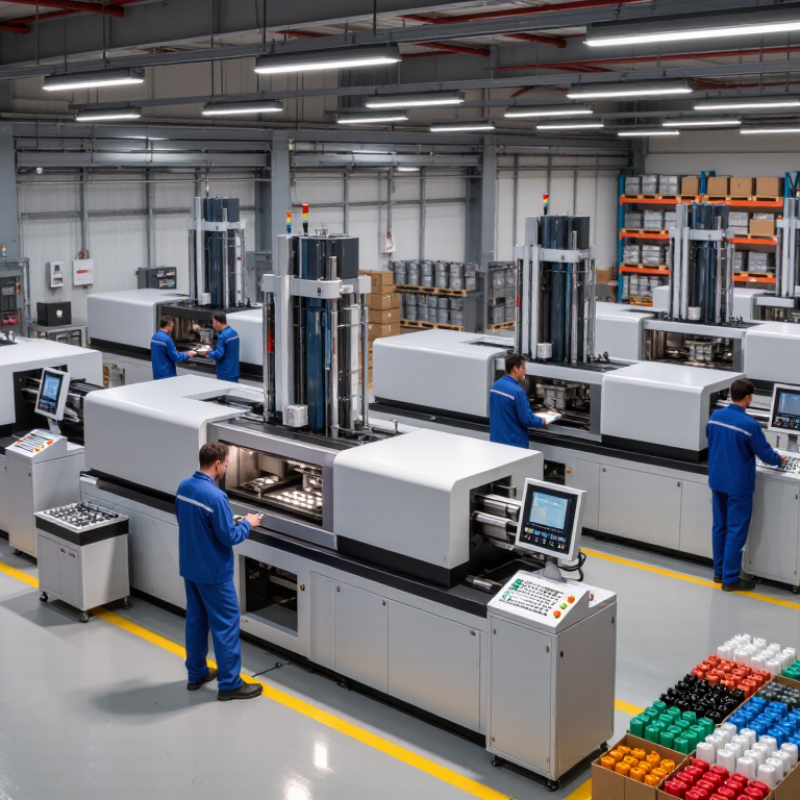
Table of Contents
[Hide]
Overview of China’s Low-Cost Injection Molding Industry
China’s low-cost injection molding industry benefits from dense manufacturing networks, experienced toolmakers, and access to common resins and components. In several production regions, mold design, machining, molding, and finishing can happen within a relatively short supply chain. That proximity may reduce coordination time and overhead, though actual savings depend on part complexity and order volume.
A careful comparison should look beyond the quoted price. Ask how the supplier manages mold trials, dimensional checks, material records, and changes to production settings. For example, a small plastic housing may need checks around screw holes, wall thickness, and surface finish. A clear inspection plan helps catch problems before thousands of parts are made. Details matter.
Low cost does not automatically mean poor quality, but it does not guarantee consistency either. Request sample parts and review measurable requirements before approving a mold. Confirm who owns the tooling, what maintenance is expected, and how replacement parts are handled. These questions take effort. Some buyers may still prioritize a quick quote and overlook long-term mold upkeep; that choice can become expensive later. Delivery schedules, communication, and freight also affect the final cost. The lowest offer is only useful when the parts perform reliably in the intended application.
China Top Low Cost Injection Molding Manufacturers - Overview of China’s Low-Cost Injection Molding Industry
| Dimension | Typical Industry Benchmark | Practical Considerations |
|---|---|---|
| Production model | Custom, made-to-order production is common, ranging from prototype and pilot runs to repeat mass production. | Capacity, equipment, tooling, and quality systems vary by facility; assess each project against its specific requirements. |
| Machine clamping force | Common equipment spans roughly 50 to 1,000+ metric tonnes of clamping force. | Required capacity depends on projected part area, material, mold design, and process conditions—not part weight alone. |
| Tooling lead time | About 3–8 weeks is a useful planning range for many conventional molds. | Part complexity, mold size, actions, surface finish, sampling, and design changes can extend the schedule. |
| Production lead time | Often planned in weeks after tooling approval and confirmation of materials and order details. | Availability of resin, production scheduling, inspection requirements, and order quantity all affect delivery. |
| Cycle time | Small or medium parts may run in cycles of tens of seconds; larger or thick-walled parts can take longer. | Resin, part geometry, wall thickness, cooling design, and cavity count are key variables. A sample run is needed for a project-specific estimate. |
| Common thermoplastics | PP, ABS, PC, PA (nylon), and PE are widely used injection-molding materials. | Choose material based on strength, heat, chemical exposure, appearance, regulatory needs, and operating environment. |
| Wall thickness | Many general-purpose molded parts use walls in the approximate 1–4 mm range. | Suitable thickness depends on material and part design. Uniform walls and gradual transitions can help reduce sink, warpage, and filling problems. |
| Dimensional tolerances | No single tolerance applies to every molded part; requirements are specified by feature, material, size, and application. | Identify critical dimensions on the drawing and agree on inspection methods. ISO 20457 provides a reference framework for tolerances and acceptance conditions for plastics molded parts. |
| Tooling selection | Tool material and construction are selected according to geometry, resin, surface requirements, and expected production volume. | Lower initial tooling cost can involve trade-offs in tool life, maintenance, finish, or capability. Compare total project cost, not tooling price alone. |
| Order quantity | There is no universal minimum order quantity across the industry. | Setup, material procurement, mold changes, and inspection can make small runs less cost-effective per part. Confirm quantity breaks in the quotation. |
| Cost drivers | Part size and weight, resin, cavity count, mold complexity, cycle time, finishing, inspection, and logistics all affect cost. | For a meaningful comparison, provide the same drawings, material grade, annual volume, quality requirements, packaging, and delivery terms to each bidder. |
| Quality planning | Inspection plans are typically tailored to part function and customer requirements. | Agree on material documentation, sample approval, critical dimensions, defect criteria, traceability, and change-control procedures before production. |
Planning note: These are broad, indicative industry benchmarks—not guaranteed quotations or uniform national statistics. Actual capability, pricing, and lead times must be confirmed for the specific part, tooling, order, and delivery requirements.
Related Posts
-
Why Order Injection Molded Parts for Your Manufacturing Needs?
-
How to Understand the Plastic Injection Molding Process Effectively?
-
Top 10 Benefits of Injection Molding Tooling for Manufacturing Success?
-

Best Low Cost Injection Molding Solutions for Global Buyers?
-
2026 Top Injection Molding Trends for Global Buyers?
-
How to Understand the Plastic Injection Molding Process?