Buying a molding solution for a medical product is rarely a simple price comparison. The right decision affects patient safety, production stability, validation effort, and long-term supply. In medical device injection molding, small choices can create large consequences. A resin change may alter shrinkage. A mold vent may influence cosmetic defects. A supplier’s documentation can determine whether your quality team trusts the process.
This guide presents seven practical tips for buyers evaluating molding partners and production plans. It focuses on experience that can be checked, not impressive claims alone. Look for proven work with comparable geometries, controlled environments, traceable materials, and documented process validation. Ask how the supplier manages cavity balance, dimensional drift, tool maintenance, and inspection records. Request evidence, such as sample reports, capability data, and realistic production timelines.
Details matter.
A strong supplier should explain technical risks in plain language. They should also ask difficult questions about tolerances, sterilization, assembly, packaging, and expected volumes. That conversation often reveals more than a polished presentation. Still, no checklist is perfect. Even experienced teams can overlook a tolerance stack or underestimate tooling changes. Buyers should leave room for design reviews, pilot runs, and measured correction. A low initial quote may become expensive when rework, delays, or rejected parts appear. Treat this article as a practical starting point, then verify every critical assumption with qualified engineering, quality, and regulatory professionals. The best decision is usually the one supported by clear evidence, realistic testing, and a supplier willing to share responsibility.
Define requirements before requesting quotes. Describe device function, patient-contact status, expected service life, and failure risks. State annual volume, launch quantity, and forecast changes. A small housing and a fluid path need different molding strategies. Include CAD files, 2D drawings, critical dimensions, draft angles, wall thickness, and allowable sink. Be precise about tolerances. “Tight everywhere” is not a useful specification. It increases cost without improving safety.
Select resin by performance and process evidence, not color or availability. Record grade, additives, moisture limits, sterilization method, and biocompatibility expectations. Identify whether the part needs transparency, flexibility, chemical resistance, or low particulate generation. Define surface finish and gate location early. A gate near a sealing edge can create trouble. Ask how the supplier will control drying, molding parameters, tooling maintenance, and lot traceability. Request sample inspection data, not only a capability promise.
Requirements should also cover validation and change control. Specify cleanroom needs, packaging, inspection frequency, sampling plans, and production record retention. Confirm measurement methods for critical features. If sterilization changes later, the material and mold may need review. That risk is easy to underestimate. Leave room for engineering feedback. Some early assumptions will be wrong. Document each revision and test representative parts under real use conditions.
Material safety should be verified before a molding trial begins. A clean-looking pellet proves little. Buyers should request the resin grade, safety data sheet, lot traceability, and change-control history. The material must suit the device’s contact type, sterilization method, and service temperature.
ISO 10993 testing can assess biological risks, including cytotoxicity, sensitization, and irritation. USP <88> may support evaluation for certain medical applications. However, a supplier’s certificate is not a complete risk assessment. The final molded part, additives, pigments, and processing residues also matter. The World Health Organization estimates that 1.3 billion people experience significant disability worldwide (Global Report on Health Equity for Persons with Disabilities, 2022). That scale makes avoidable material failures unacceptable.
Regulatory evidence should connect each material decision to the device’s technical file. ISO 13485:2016 remains a practical quality framework, and the ISO Survey 2023 reported more than 30,000 certified sites worldwide. Certification helps, but it does not replace buyer oversight. Ask for validation records, biocompatibility reports, sterilization compatibility data, and supplier audit findings. FDA guidance also expects documented risk controls and objective evidence, not verbal assurances. Too often, buyers review compliance after tooling starts. That is expensive. One weakness remains: test reports may cover a resin family, not the exact formulation. Verify the exact grade, colorant, and production site.
7 Tips for Medical Device Injection Molding Buyers
Assess Mold Design, Precision, and Production Capability
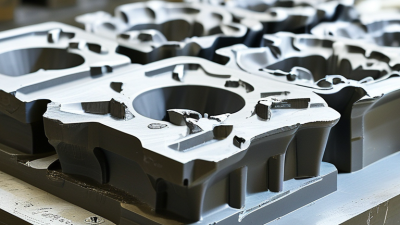
Medical device buyers should inspect the mold before reviewing the quoted unit price. Ask for steel selection, cooling-channel layouts, draft angles, and gate locations. These details affect warpage, flash, cycle time, and cleaning performance. A mold may look excellent on a computer screen. It can still fail during high-volume molding.
Precision needs measurable evidence. Request capability studies for critical dimensions, not only inspection samples. A practical target might include Cpk values near or above 1.33, when process conditions support it. Confirm how the supplier controls cavity balance, resin drying, and machine calibration. The U.S. FDA’s 2023 medical device recall reporting recorded more than 1,000 recalls, showing why repeatable manufacturing deserves early attention.
Production capability extends beyond press size. Review validation plans, traceability, preventive maintenance, and operator training. ISO 13485:2016 emphasizes controlled processes and documented evidence throughout the quality system. Ask for actual cycle-time records and rejection data from comparable medical programs. Grand View Research valued the global medical devices market at approximately 512 billion dollars in 2024, reflecting demanding scale expectations. Still, capacity claims can be optimistic. I would verify them with a witnessed trial, molded-part measurements, and a small pilot run. Perfect first-pass tooling is uncommon. That is worth admitting.
| No. | Buyer Tip | Evaluation Dimension | Practical Data or Benchmark | Evidence to Request | Risk Signal |
|---|---|---|---|---|---|
| 1 | Review the mold design for manufacturability | Draft, wall thickness, ribs, bosses, gates, weld lines, and ejection | A commonly used starting point for draft is approximately 0.5° to 1° per side for many smooth surfaces; textured surfaces generally require more. Uniform walls help reduce sink marks and warpage. | DFM report, mold-flow analysis, gate-location proposal, venting plan, and ejection layout | No documented DFM review or unresolved cosmetic and functional defects |
| 2 | Define precision requirements before quoting | Dimensional tolerances, GD&T, critical-to-function features, and measurement method | ISO 20457 provides guidance for tolerances on injection-molded plastic parts. Tight tolerances should be assigned only to features that affect fit, sealing, movement, or performance. | Tolerance stack-up, drawing review, CMM capability, gauge list, and measurement-system study | The quotation promises universal “high precision” without feature-level tolerances |
| 3 | Verify process validation capability | Installation Qualification, Operational Qualification, and Performance Qualification | A medical molding process normally requires documented IQ/OQ/PQ or an equivalent validation approach, with approved limits for temperature, pressure, cooling, cycle time, and inspection results. | Validation protocol, approved process window, first-article report, capability study, and revalidation procedure | Only sample approval is offered, with no controlled process window or validation records |
| 4 | Check statistical process capability | Control charts, Cp/Cpk or Pp/Ppk, defect rate, and reaction plan | A Cpk of 1.33 or higher is a commonly used buyer benchmark for stable critical characteristics, but the required value should be agreed according to risk, specification limits, and sampling plan. | Recent capability reports using actual production data, SPC records, nonconformance data, and corrective-action examples | Capability results are based only on hand-picked samples or lack specification limits |
| 5 | Confirm material and lot traceability | Resin identity, grade, lot number, drying records, additives, and change control | Every production lot should be traceable to the approved material specification and incoming inspection record. Resin drying parameters must follow the material supplier’s technical data. | Material certificates, lot-traceability flow, drying logs, approved supplier list, and engineering-change procedure | Material substitutions are allowed without written approval or documented risk assessment |
| 6 | Assess cleanliness and contamination control | Controlled environment, personnel practices, particulate control, packaging, and handling | ISO 14644-1 classifies cleanrooms by airborne particle concentration. The required classification depends on product risk, assembly conditions, and the validated contamination-control strategy. | Cleanroom classification report, environmental-monitoring data, cleaning schedule, gowning procedure, and packaging validation | A cleanroom certificate is shown, but no routine monitoring or contamination response plan exists |
| 7 | Evaluate long-term production capacity | Machine suitability, mold-maintenance system, capacity, redundancy, lead time, and quality system | A credible capacity plan should show machine tonnage, validated cycle time, available production hours, planned maintenance, tooling spare parts, and a documented scale-up or contingency plan. | Capacity model, equipment list, preventive-maintenance records, business-continuity plan, ISO 13485 certificate, and on-time-delivery history | Capacity is quoted only in units per month without cycle-time, uptime, staffing, or maintenance assumptions |
7 Tips for Medical Device Injection Molding Buyers
Verify quality control before reviewing price. FDA’s FY2023 Medical Device Recall Report recorded more than 1,000 device recalls. Many failures begin with weak process controls, not dramatic machine breakdowns. Ask for documented inspection plans, calibrated gauges, resin verification, and statistical process control records. Check whether operators inspect first-off parts and retain measurements for every lot.
Tip: Request a sample batch record. It should connect material lot, mold, machine, operator, inspection results, and shipment date. Traceability must work in reverse, too. A supplier should identify affected parts within hours, not several days. ISO 13485 guidance emphasizes documented production controls and risk-based process validation. However, a certificate alone proves very little. Review recent audit findings, corrective actions, and evidence that problems were actually closed.
Tip: Confirm IQ, OQ, and PQ validation for molding, drying, assembly, and critical inspection steps. Ask how revalidation is triggered after tooling repair, software changes, or resin changes. The FDA’s 2024 Quality Management System Regulation aligns U.S. requirements more closely with ISO 13485, increasing the value of consistent records. Still, paperwork can become theater. Visit the floor, watch a changeover, and compare live labels with controlled procedures. Ask uncomfortable questions. The best supplier may admit one process is still being improved. That honesty is useful, but undocumented improvement is not control.
The chart shows a practical buyer-priority score for evaluating quality control, validation, and traceability systems. The scoring model reflects common medical-device supplier audit expectations, including ISO 13485 quality management, process validation, inspection controls, nonconformance management, and lot traceability. It is a verification guide, not a company ranking or market statistic.
Tip one: Request a complete cost breakdown, including tooling, resin, inspection, packaging, and secondary operations. The cheapest quote often hides important work.
Tip two: Check capacity using actual press sizes, cavity counts, and available production hours. A supplier may have impressive equipment, but limited scheduling space.
Tip three: Compare lead times by stage. Ask for dates covering design review, mold fabrication, qualification, pilot production, and routine delivery.
Tip four: Review capacity during demand changes. Medical forecasts can be wrong. A realistic supplier should explain how it handles volume increases without making careless promises.
Tip five: Examine quality support, including traceability, measurement records, process controls, and documented change procedures. Ask to see sample records, not only polished presentations.
Tip six: Evaluate communication during technical problems. Clear escalation paths matter when flash, sink marks, or dimensional drift appears.
Tip seven: Confirm engineering support for material selection, draft angles, cooling, and manufacturability. Experienced teams can prevent expensive mold revisions. Still, no supplier is perfect. I would compare response speed, corrective-action discipline, and evidence from comparable projects. A detailed quote is useful, but reliable execution matters more than confident language.