


How to Choose the Best Polypropylene Molding Process?
Choosing the right polypropylene molding process affects cost, cycle time, strength, and product consistency. The decision begins with the part, not the machine. Wall thickness, draft angles, weld lines, shrinkage, surface finish, and annual volume all matter.
Global demand makes this choice increasingly important. PlasticsEurope reported global plastics production of about 414 million tonnes in 2023, confirming the scale of modern polymer manufacturing. The OECD’s Global Plastics Outlook also projects significant growth in plastics use by 2060 under current policies. Polypropylene remains widely used in automotive components, packaging, medical products, household goods, and industrial containers. However, market size alone cannot justify one process.
Injection molding often suits high-volume parts with tight dimensional requirements. It can produce a textured dashboard panel or a thin living hinge within seconds. Blow molding may fit hollow bottles, while extrusion molding supports continuous profiles and sheets. Compression molding can become attractive for specific geometries, lower tooling pressure, or reinforced compounds. Each option creates different compromises.
No process wins every time. That assumption needs testing.
Industry standards provide a useful control point. ISO 294 describes methods for preparing injection-molded thermoplastic test specimens, helping engineers compare material behavior under controlled conditions. Reports from Grand View Research and Smithers also emphasize growing demand for lightweight, recyclable, and cost-efficient polypropylene products. Yet published forecasts cannot replace mold trials, flow analysis, and supplier experience. A practical polypropylene molding decision should connect design requirements, resin grade, tooling investment, production volume, quality data, and end-of-life goals. Small details, such as a two-degree draft or a poorly placed gate, can decide whether a promising design succeeds.
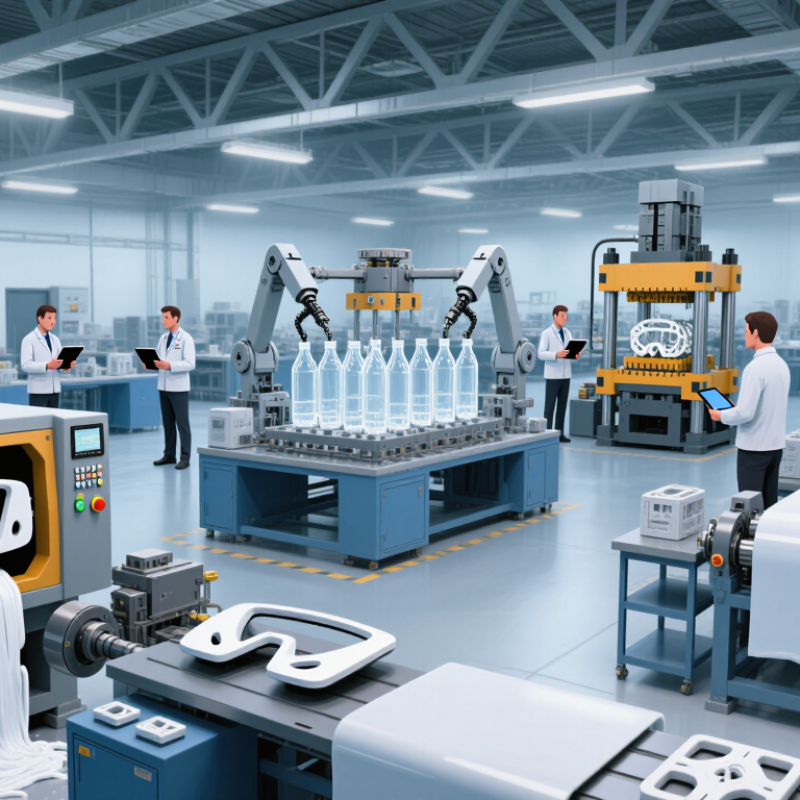
Table of Contents
[Hide]
Define the Product Requirements and Performance Targets
Choosing the best polypropylene molding process starts with clear product requirements. Before comparing injection molding, compression molding, or other options, define how the part must perform.
Record the expected dimensions, wall thickness, weight, surface finish, and acceptable tolerances. Then describe the working environment. Will the product face repeated impact, heat, moisture, chemicals, or outdoor exposure? A hinged container, for example, may need millions of flex cycles, while a storage tray may mainly require stiffness and low cost. Be specific. Vague targets create expensive revisions later.
Convert each requirement into a measurable performance target. Specify the load in newtons, the operating temperature range, the cycle count, and the expected service life. Also define annual volume, production speed, color consistency, and acceptable cosmetic defects. These details influence mold design, cooling demands, cavity count, and process selection. In production projects, I have seen teams focus heavily on unit price while overlooking warpage after cooling. That mistake can make a low-cost process unsuitable. It is worth checking shrinkage assumptions with trial parts and dimensional testing.
Not every target needs to be perfect at the beginning. Some are estimates. Mark them clearly, then rank them by safety, function, appearance, and cost. Testing a prototype under real loading can expose weak ribs, brittle hinges, or uneven walls. A practical requirement document should also state how results will be measured, which tools will be used, and who approves the samples. Otherwise, the process may meet the drawing but fail during actual use.
| Product Requirement | Performance Target or Design Question | Injection Molding | Blow Molding | Thermoforming | Extrusion | Recommended Direction |
|---|---|---|---|---|---|---|
| Part geometry | Does the product require complex details, ribs, bosses, living hinges, or tight dimensional control? | Supports complex 3D parts and integrated features. |
Limited to hollow parts formed around a mold. | Best for relatively shallow, open, or sheet-formed shapes. | Best for continuous profiles rather than discrete complex parts. | Choose injection molding for detailed, three-dimensional components. |
| Hollow structure | Is the product a bottle, container, tank, duct, or other enclosed hollow component? | Possible with specialized tooling, but core and assembly requirements may increase. | Designed for seamless hollow containers and technical parts. |
Suitable for open-top trays and containers, but typically requires trimming. | Suitable for continuous hollow profiles and tubes. | Use blow molding for closed hollow containers; use extrusion for continuous tubes or profiles. |
| Production volume | Will the product be made in thousands, hundreds of thousands, or millions of units? | Highly efficient for medium-to-high volumes after tooling is completed. | Cost-effective for repeated production of hollow parts. | Attractive for low-to-medium volumes and large parts because tooling can be comparatively simple. | Efficient for continuous, high-volume output. | Match the process to annual volume and consider tooling amortization rather than unit cost alone. |
| Wall thickness | Is a consistent wall required, and what level of variation is acceptable? | Good control when melt flow, gate design, cooling, and packing are properly optimized. | Wall distribution can vary around corners, handles, and the parting line. | Wall thinning is common in corners and deep-draw areas. | Can provide consistent thickness along the profile when die and cooling are well controlled. | Use injection molding for precision walls; avoid deep thermoformed geometry when uniformity is critical. |
| Dimensional accuracy | What tolerances, fit requirements, and repeatability are needed? | Generally the strongest option for repeatable molded dimensions. |
Moderate; shrinkage and parison behavior must be controlled. | Moderate; material thickness and cooling affect final dimensions. | Good for constant cross-sections, with calibration and cooling influencing accuracy. | Select injection molding for tight fits, snap-fits, and precision interfaces. |
| Mechanical strength | Must the part resist impact, bending, pressure, fatigue, or repeated assembly? | Strong option; ribs, controlled orientation, and reinforced grades can improve performance. | Suitable for lightweight hollow structures, subject to wall distribution and weld-line effects. | Suitable for moderate loads; formed corners may become thinner and less stiff. | Suitable for profiles and sheets with continuous geometry. | Define load cases, impact conditions, temperature, and expected service life before selecting the process. |
| Appearance | Are gloss, texture, color uniformity, transparency, or visible weld-line control important? | Offers broad control through mold texture, gating, cooling, and process settings. | Can produce attractive containers, although pinch-off lines and parison effects may be visible. | Suitable for broad surfaces, but stretching can affect texture, color, and thickness. | Suitable for continuous surfaces, with die lines and melt fracture requiring control. | Choose the process that places visible marks in acceptable locations and supports the required finish. |
| Part size | Is the component small and detailed, or large and relatively simple? | Best for small-to-large parts within machine clamping and shot-size limits. | Well suited to medium and large hollow parts. | Often advantageous for large-area panels, covers, and trays. | Efficient for long, continuous products with a constant profile. | Evaluate machine capacity, mold size, handling, trimming, and cooling requirements together. |
| Cycle time and productivity | How quickly must each part be produced, cooled, trimmed, and released? | Short automated cycles are possible, but cooling often controls the cycle. | Suitable for automated continuous or cyclic production. | Heating and cooling sheets can make cycles longer for thick parts. | Continuous output can provide high productivity for suitable profiles. | Prioritize injection or extrusion when repeatable high throughput is the main target. |
| Material efficiency | How important are low scrap, low part weight, and efficient material use? | Can achieve low scrap with hot-runner systems, optimized gating, and controlled wall design. | Can produce lightweight hollow parts, though flash and excess parison may require trimming. | Sheet scrap from trimming may be generated and should be assessed for recovery. | Can be efficient for continuous profiles, with start-up scrap and edge trim considered. | Compare total material consumption, including runners, flash, trim, rejects, and recycled content. |
| Temperature exposure | Will the product face elevated temperatures, hot filling, or repeated thermal cycling? | Material grade, crystallinity, wall thickness, and cooling history strongly affect performance. | Suitable when the selected grade and wall design meet the thermal requirement. | Thermal distortion risk increases in thin or highly stretched areas. | Suitable for continuous products when the grade and cooling method are appropriate. | Specify continuous-use temperature, peak temperature, load during heating, and exposure duration. |
| Chemical resistance | Will the part contact water, detergents, oils, acids, bases, or other chemicals? | Polypropylene generally provides good resistance to many common aqueous chemicals, subject to concentration and temperature. | Commonly used for chemical-resistant containers when the grade and design are suitable. | Suitable for trays and liners, but stress concentration and temperature can affect resistance. | Suitable for pipes, sheets, and profiles exposed to compatible chemical environments. | Validate the exact chemical, concentration, temperature, exposure time, and mechanical stress. |
| Tooling investment | What budget and lead time are available for molds, dies, fixtures, and automation? | Tooling can be complex and costly, especially for multi-cavity or high-precision molds. | Requires specialized molds and equipment for parison control and pinch-off. | Tooling is often simpler for low-pressure forming and large parts. | Requires a die and calibration or cooling equipment suited to the profile. | Balance tooling cost against expected volume, quality targets, changeover needs, and product life. |
| Post-processing | Can the finished part leave the process ready for use, or are trimming, drilling, welding, or assembly acceptable? | Often produces near-net-shape parts with limited secondary operations. | Flash removal, neck finishing, leak testing, or trimming may be required. | Usually requires trimming and may need drilling, forming, or assembly. | Cutting to length, punching, welding, or downstream sizing may be required. | Include secondary-operation labor, equipment, inspection, and defect risk in the process comparison. |
| Quality validation | What tests will confirm that the product meets its performance targets? | Dimensional inspection, impact testing, tensile testing, hinge-cycle testing, and visual inspection may apply. | Leak, burst, drop, top-load, wall-thickness, and dimensional testing may apply. | Thickness mapping, load testing, dimensional checks, and appearance inspection may apply. | Profile dimensions, surface quality, stiffness, impact, and length tolerances may apply. | Define measurable acceptance criteria before finalizing the mold, die, material grade, and process. |
Selection principle: Start with the product’s geometry, load case, service environment, annual volume, allowable tolerances, appearance requirements, and total cost target. The best polypropylene molding process is the one that consistently meets these measurable requirements with acceptable tooling, cycle time, material usage, and post-processing effort.
Related Posts
-
China Best Polypropylene Molding Supplier?
-
Top 10 Polypropylene Molding Suppliers in China 2026?
-
China Top 10 Polypropylene Molding Manufacturers
-
How to Optimize Polypropylene Molding for Better Product Quality?
-
How to Understand the Injection Molding Process for Beginners?
-
Top 10 Benefits of Plastic Injection Molding for Manufacturers?