How to Get Low Cost Injection Molding in 2026?
In 2026, low cost injection molding is less about finding the lowest quote and more about controlling the costs behind each usable part. Mold design, resin choice, production volume, cycle time, and inspection requirements all affect the final price. A quote for 10,000 parts may look attractive until tooling, shipping, or secondary operations appear as separate charges. Ask suppliers to itemize these costs and confirm that quotes use the same material, tolerances, and annual volume.
Small design decisions can have real consequences. A thick boss may cause sink marks; an unnecessary tight tolerance can increase inspection and rework. Simplifying ribs, choosing a resin suited to the part’s environment, and reviewing draft angles with a molding engineer can help reduce avoidable expense. Tooling also deserves a realistic comparison: aluminum molds can suit some lower-volume projects, while steel may make sense for longer production runs. Neither is automatically cheaper over the part’s full life.
Check more than the estimate. Request sample parts, relevant quality records, and details about the supplier’s tooling and production process. Then compare expected part cost across your likely order quantities. There is no magic setting. Even a careful estimate can miss a problem discovered during sampling, so leave room for revisions. The practical goal is dependable parts at a predictable total cost—not simply the smallest number on a spreadsheet.
Identify the Main Cost Factors in Injection Molding
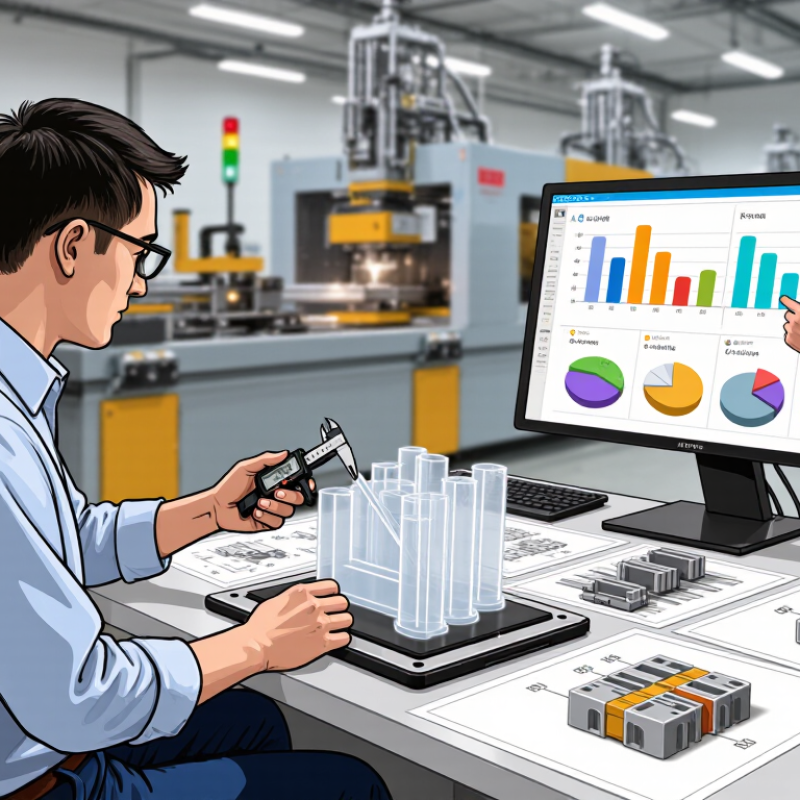
Injection molding cost is not just the press rate. Tooling, resin, cycle time, part geometry, and quality checks all shape the quote. A deep rib may require extra steel and slow ejection. Tight tolerances can increase inspection needs and scrap risk. Filled or engineering-grade resins often cost more and may wear tooling faster. Higher order volumes spread mold costs across more parts, provided the design stays stable.
PlasticsEurope’s 2024 report, Plastics—The Fast Facts, estimates global plastics production at 413.8 million tonnes in 2023. This is not an injection-molding cost benchmark, but it highlights the scale of the resin-dependent supply chain. Resin prices vary by grade, region, and timing. Ask suppliers to separate material, tooling, machine time, and secondary-operation costs. One assumption deserves a second look: cheaper resin may increase rejects or cycle time, wiping out its initial savings.
Tips: Request quotes at two annual volumes. Compare single-cavity and multi-cavity tooling, and ask about cycle time, tool life, and maintenance exclusions. Keep wall thickness even and avoid cosmetic requirements on hidden faces. Small design changes can help. Late mold revisions can be costly.
Choose a Part Design That Uses Less Material and Simpler Tooling
How to Get Low Cost Injection Molding in 2026?
Choose a Part Design That Uses Less Material and Simpler Tooling
Start with the part’s job, not its appearance. A thick, solid handle may seem sturdy, but a hollowed core or carefully placed ribs can reduce resin use without sacrificing function. Keep wall thickness consistent where possible; sudden changes can cause sink marks, warping, and extra process adjustments. Small details matter. A sharp internal corner, for example, can concentrate stress and complicate machining. A modest radius is usually kinder to both the tool and the part.
Simplify the mold, too. Avoid side actions by changing undercuts, and use standard-size holes or features when the design allows. Every extra slide, insert, or complex surface can add tool cost and maintenance. There is a trade-off: removing too much material may make a part flexible or difficult to fill. Test the geometry with a prototype, then review it with a molding engineer before cutting steel. The OECD’s Global Plastics Outlook (2022) reports that only 9% of plastic waste was recycled in 2019; that figure is not a molding-cost benchmark, but it reinforces the value of avoiding unnecessary material. PlasticsEurope’s Plastics—the Fast Facts 2023 estimates global plastics production at 400.3 million tonnes in 2022. That scale makes small design efficiencies worth examining. A few grams saved per part can add up across a long production run.
Compare Mold Types, Materials, and Manufacturing Locations
Low-cost injection molding starts with matching the mold to expected demand, not simply choosing the cheapest quote. For short runs, a single-cavity aluminum mold can lower upfront tooling costs and speed delivery. It may wear sooner under repeated cycles. For stable, higher-volume production, hardened steel can spread its higher initial cost across more parts. Multi-cavity molds may reduce unit costs, but need balanced filling and careful setup. Cheap tooling is not always cheap.
Material choice also changes the calculation. Polypropylene is often economical for simple, flexible parts, while ABS may suit housings that need stiffness and impact resistance. Nylon can handle demanding mechanical use, but moisture absorption may affect dimensions. Small details matter. Uniform wall thickness, suitable draft angles, and well-placed gates can reduce defects and wasted resin. A lower-priced material may still cost more if it needs longer cooling or extra inspection.
Manufacturing location affects more than the quoted part price. A nearby shop may offer faster sample reviews and simpler communication, while a distant supplier may have lower labor costs or specialized equipment. Compare shipping, packaging, lead times, quality records, and the cost of correcting a rejected batch. Request sample parts and measurement data before approving production. The comparison is rarely tidy. One overlooked detail can change the result.
How to Get Low Cost Injection Molding in 2026? - Compare Mold Types, Materials, and Manufacturing Locations
Planning note: Cost ranges below are broad budgetary estimates in U.S. dollars, not supplier quotations. Actual prices depend on part size, geometry, tolerances, surface finish, resin grade, order quantity, and the scope of tooling and inspection. Resin prices are especially volatile; confirm current local pricing before making a purchasing decision.
1. Compare Mold Types
| Mold Type |
Indicative Tooling Cost |
Typical Tool Life |
Best Fit |
Cost-Saving Considerations |
| 3D-printed or simple prototype tooling |
About $500–$5,000, depending on process and part complexity |
Often tens to hundreds of shots; highly dependent on tool material and molding conditions |
Fit checks, early design validation, and very small trial runs |
Useful for testing before investing in a machined mold, but generally not a substitute for durable production tooling. |
| Aluminum prototype or bridge mold |
About $2,000–$15,000 |
Often hundreds to several thousand shots; some designs can run longer with suitable maintenance |
Prototype and low-volume production where a short tool life is acceptable |
Can reduce initial tooling expense and lead time. Confirm expected shot count, cooling requirements, and repair options. |
| Pre-hardened steel mold |
About $10,000–$50,000 for many simple-to-moderate tools |
Commonly planned for roughly 100,000–500,000 shots, subject to design, resin, and upkeep |
Recurring production with moderate or higher demand |
A practical balance of initial cost and durability. Choose the number of cavities based on forecast volume and machine capacity. |
| Hardened steel production mold |
About $20,000–$100,000 or more; complex multi-cavity tools can cost substantially more |
Often designed for 500,000 shots or more; actual life varies considerably |
High-volume production, abrasive resins, or demanding repeatability requirements |
Higher upfront cost may be justified over long runs. Consider hardening only the wear areas when the design allows. |
2. Compare Common Injection-Molding Materials
| Material |
Indicative Bulk Resin Range |
Typical Characteristics |
Ways to Manage Cost |
| Polypropylene (PP) |
About $1.20–$2.50 per kg |
Low density, chemical resistance, and good fatigue resistance; common in hinges and household parts |
Use an appropriate unfilled grade when its strength and heat resistance meet requirements. |
| High-density polyethylene (HDPE) |
About $1.20–$2.50 per kg |
Low density, impact resistance, and chemical resistance; relatively low stiffness |
Keep wall thickness and part weight to the minimum allowed by performance needs. |
| ABS |
About $1.80–$3.50 per kg |
Good balance of impact strength, rigidity, and appearance; widely used for housings |
Specify color and surface requirements carefully; special grades and finishes can add cost. |
| Polystyrene (HIPS or GPPS) |
About $1.30–$3.00 per kg |
Generally economical and easy to process; impact-modified HIPS is tougher than general-purpose GPPS |
Consider it for non-critical applications where its impact and temperature limits are acceptable. |
| Polycarbonate (PC) |
About $2.50–$5.50 per kg |
High impact strength and heat resistance; transparent grades are available |
Use only when its performance is needed; drying and processing controls are important. |
| Polyamide (PA6 or PA66, nylon) |
About $2.50–$6.00 per kg |
Good strength and wear resistance; absorbs moisture, which affects dimensions and properties |
Compare unfilled and glass-filled grades against the actual load and dimensional requirements. |
| Thermoplastic elastomer (TPE) |
About $2.50–$7.00 per kg |
Flexible, with softness and durability varying by formulation |
Specify hardness and bonding needs; avoid requesting performance features that the part does not require. |
3. Compare Manufacturing Locations
| Location |
Typical Cost Position |
Common Tooling Lead-Time Planning Range |
Potential Advantages |
Costs and Risks to Include |
| China |
Often lower quoted tooling and molding prices than North American options, but varies by tool complexity and specification |
About 4–10 weeks for many straightforward tools; complex tools may take longer |
Broad tooling capacity and supplier options; can be cost-effective for repeat production and larger orders |
Include freight, import duties, inspection, communication, payment terms, and the time needed for sampling and corrections. |
| Mexico |
Often between low-cost overseas sourcing and domestic U.S. production; actual price depends on region and project |
About 6–12 weeks for many straightforward tools; confirm timing with the toolmaker |
Geographic proximity to the U.S. can simplify visits, transport, and ongoing coordination |
Evaluate cross-border logistics, customs requirements, local capacity, and production scheduling. |
| United States |
Often higher direct labor and tooling costs than lower-cost offshore options |
About 6–12 weeks for many straightforward tools; complex projects may take longer |
Closer collaboration, easier in-person review, and shorter domestic shipping routes for many U.S. buyers |
Compare the complete landed cost and project-management effort, not just the initial tool quote. |
| Central or Eastern Europe |
Varies widely; may be competitive for some projects, but is not consistently cheaper than other regions |
About 6–12 weeks for many straightforward tools; confirm capacity and schedule |
Can offer access to regional engineering and manufacturing networks, depending on the project |
Account for transport, customs, language, time-zone coordination, and the location of final production. |
4. Practical Levers for Lower Total Cost
| Decision |
Lower-Cost Approach |
Important Trade-Off |
| Part design |
Use consistent wall thickness, draft angles, and simple parting lines; avoid unnecessary undercuts and side actions. |
Design changes can affect strength, appearance, or function, so validate them before tooling release. |
| Tool cavity count |
Start with a single-cavity tool when forecast volume is uncertain; consider multi-cavity tooling when demand supports it. |
More cavities increase tooling cost and require balanced filling and suitable machine capacity. |
| Material specification |
Choose a standard resin grade and color where possible, and specify recycled content only where requirements permit. |
Confirm regulatory, appearance, mechanical, and consistency requirements before substitution. |
| Supplier comparison |
Send the same 3D model, 2D drawing, resin grade, finish, quantity forecast, and inspection requirements to each bidder. |
A low quote may exclude sampling, modifications, shipping, tax, or maintenance; compare equivalent scopes. |
| Manufacturing location |
Compare total landed cost, including tooling, production, freight, duties, quality checks, and project management. |
Lower unit or tool pricing may be offset by logistics, longer feedback cycles, or higher inventory needs. |
Request and Evaluate Detailed Quotes from Multiple Suppliers
Request detailed quotes from at least three injection molding suppliers. Give each the same 3D files, drawing revisions, resin grade, annual volume, and delivery target. Otherwise, the numbers are not comparable. Ask each supplier to separate tooling, sampling, part price, packaging, freight, and any engineering fees. A low unit price can hide costly mold maintenance or unclear ownership terms.
The comparison matters in a growing market. Grand View Research’s Injection Molding Market report valued the global market at $284.4 billion in 2023 and projected 4.8% annual growth through 2030. More demand does not guarantee a better quote. Check what each supplier assumes: cycle time, cavity count, scrap rate, and production shifts. Request a sample schedule, too. A quote that says “tooling included” is incomplete unless it defines tool life, repair responsibility, and storage. Ask for a written breakdown. Then compare the total cost at your expected order volume, not just the first batch. I have seen buyers overlook freight and inspection costs; they are easy to miss. Still, supplier estimates can be wrong, and a spreadsheet cannot predict every production delay.
How to Get Low-Cost Injection Molding in 2026
Compare detailed, like-for-like quotes from multiple suppliers. This illustrative example shows estimated costs for a 10,000-part order; it is not actual supplier pricing or a market benchmark.
Ask each supplier to itemize tooling, per-part production, setup, and freight, and confirm that materials, tolerances, annual volume, and shipping terms match before comparing totals.
Verify Quality, Lead Time, and Total Cost Before Ordering
Low-cost injection molding in 2026 should be judged by verified value, not the lowest quote.
Ask for a first-article sample and compare it with your drawing. Check critical dimensions, surface finish, flash, and fit using the actual mating part. Confirm the resin grade and request material documentation. A polished sample is useful, but it cannot prove every production run will match.
Lead time needs a clear breakdown: mold design, tooling, sampling, revisions, production, and shipping. Ask when each stage begins and what could delay it. Confirm the supplier’s inspection process and how defects are handled. Then compare total cost, including tooling, setup, material, packaging, freight, and expected scrap.
Calculate cost per acceptable part, not merely cost per molded part.
A low quote can hide exclusions. Even careful checks leave some uncertainty, so put assumptions and acceptance criteria in writing.
Tips
Request an itemized quote and a dated production schedule. Keep a few samples from approval for comparison later. If a supplier promises an unusually fast turnaround, ask which steps are shortened. Do not assume that cheaper resin or thinner walls will perform the same; test the part under real use conditions before committing to a large order.