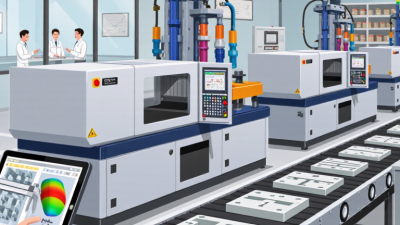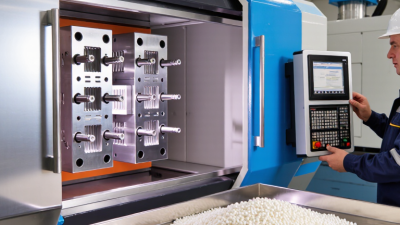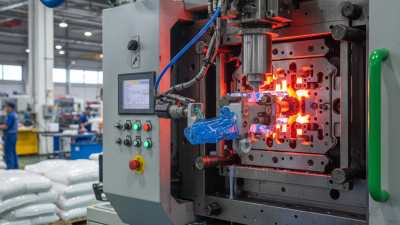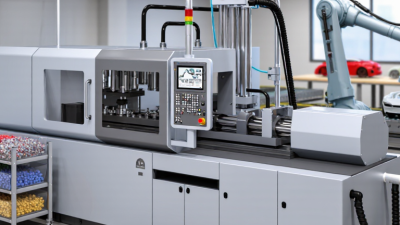
Choosing a plastic injection molding partner is a production decision, not just a price comparison. A mold can look polished on a factory tour, yet small changes in cooling, resin drying, or cycle settings may affect every part. Buyers should compare tooling experience, process controls, material traceability, quality documentation, and realistic lead times—not only press tonnage.
Grand View Research estimated the global injection molded plastics market at USD 284.6 billion in 2023 and projected a 4.8% compound annual growth rate from 2024 to 2030. That growth creates opportunity, but it does not guarantee a reliable supplier. For context, ask candidates to explain how they validate a mold, monitor dimensions, and respond when a production run drifts. Request sample parts and measurement records. Look closely at thin walls, gate marks, and visible weld lines.
University of Massachusetts Lowell professor David Kazmer is a recognized plastics-processing expert. A practical takeaway from his research is: “Repeatable parts depend on controlling the process, not simply buying a larger press.” Treat that as a paraphrase, not a verbatim quotation. It points buyers toward evidence: documented process windows, inspection methods, and corrective-action records. These details can reveal more than a sales presentation. Still, no checklist removes every risk. This guide compares leading companies and the capabilities buyers should verify before committing to tooling or production.

Plastic injection molding companies turn resin pellets into repeatable parts using heated barrels, steel molds, and controlled pressure. Their work often starts before production. Engineers review part geometry, wall thickness, draft angles, and expected production volume. A small change, such as thickening a corner, can create sink marks or extend cooling time. Details matter.
Many providers offer design-for-manufacturing feedback, mold design and fabrication, sampling, production, and finishing. Some also handle assembly, printing, or packaging, while others focus on molding alone. Ask who manages each step. A clear quote should identify resin grade, cavity count, estimated cycle time, inspection method, and tooling maintenance. A low price can hide missing assumptions.
Buyers should request sample parts and compare measurements with drawings, not just judge appearance. Ask how the company manages color changes, material drying, and rejected parts. These questions can reveal process discipline. Still, no supplier removes every trade-off: tighter tolerances may increase tooling and inspection costs. A first design is rarely perfect. Leave room for revision. That may feel slower, but it can prevent costly mold changes after launch.
Buyers should compare process control, not just quoted piece price. Grand View Research valued the global plastic injection molding market at USD 284.5 billion in 2023 and projected 4.8% annual growth through 2030. That scale makes repeatability a practical differentiator. Ask how suppliers monitor melt temperature, injection pressure, cooling time, and cavity-to-cavity variation. Request sample inspection data, not only a capability statement. A stable process should produce consistent dimensions across production runs. Ask for proof.
Tooling support matters just as much. Compare mold-flow analysis, tool maintenance plans, expected tool life, and ownership terms. For tight tolerances, ask how measurements are taken and how often gauges are calibrated. OECD’s Global Plastics Outlook reports that plastics production reached 460 million tonnes in 2019, twice the 2000 level. This volume highlights why material traceability and scrap tracking deserve attention, even on modest orders. Check whether the supplier can document resin grade, colorant, and regrind use. I still find cycle-time claims easy to trust too quickly; request production records under comparable part geometry and material conditions. Also compare automation, secondary finishing, and realistic capacity during peak demand. A polished sample is not the whole story.
Use these checklist questions to compare suppliers consistently. The bars count questions in this example checklist; they are not supplier scores or industry statistics.
Quality (4): certifications, inspection methods, traceability, corrective actions. Engineering (4): design-for-manufacturing support, prototyping, tolerance review, process validation. Tooling (3): tool ownership, maintenance plan, expected tool life. Production (4): machine capacity, automation, production scheduling, contingency planning. Commercial (3): quoted lead time, minimum order quantities, logistics support.
Buyers comparing injection molding suppliers should look beyond geography and examine the work each factory handles well. North American manufacturers often support close engineering collaboration and shorter shipping routes for domestic programs. European facilities may be a fit for tight dimensional controls, documented processes, or complex technical parts. In East Asia, established tooling networks and high-volume production can help with electronics housings and consumer components. Southeast Asian suppliers may offer growing capacity and integrated assembly. These are patterns, not guarantees.
Match the specialty to the part. A medical component may require controlled production areas, validated processes, and clear material traceability. Automotive programs often need repeatable quality records and dependable output across long production runs. Thin-wall packaging, large structural parts, and precision gears each demand different machine capability, mold design, and resin knowledge. Ask to review relevant sample parts and process records. Details matter.
Regional labels can mislead. A supplier’s capability depends on its people, equipment, and quality system. Ask for the press range, tooling ownership terms, expected cycle time, and inspection methods. Confirm that any claimed certification covers the specific facility and process you will use. Request a small production trial when practical, then compare part measurements with the drawing. The cheapest quote may omit important assumptions. Even a clear quote can miss a detail. Verify before committing.
A capable injection molding supplier should support quality claims with records, not polished sales language. Ask for dimensional inspection reports on critical features, such as a 0.2-millimeter snap-fit gap or a flat sealing surface. Confirm how often parts are sampled and what happens when measurements drift. Request a material certificate and a clear process for approving resin substitutions. Details matter. A small pilot run can reveal sink marks, flash, or inconsistent color before a large order is committed. Still, even a pilot may not reproduce every production condition.
Compare quotes line by line. Check whether the price includes tooling, setup, secondary operations, packaging, and freight; a low unit price can exclude costly items. Clarify expected cycle time and who pays for mold changes. Then test stated capacity against machine tonnage, available shifts, maintenance plans, and current workload. Ask for a realistic production schedule, not just a maximum monthly figure. Ask for evidence. A supplier may have enough machines but lack operators or quality staff during peak periods. It is easy to overvalue a neat spreadsheet; real capacity can change quickly when a tool needs repair. Request recent delivery and defect data, and agree on how both sides will review problems without hiding inconvenient results.
Use this comparison framework to assess prospective suppliers. Requirements and quoted performance should be verified for the specific part, resin, tooling, and production volume.
| Evaluation Area | Information to Request | How to Evaluate | Practical Benchmark or Note |
|---|---|---|---|
| Quality system | Current quality-management certificates, scope, issuing body, and audit status. | Confirm the certificate applies to the relevant site and manufacturing activities; ask how nonconformances and corrective actions are managed. | ISO 9001 covers quality-management systems. ISO 13485 is specific to medical-device quality management; IATF 16949 is used in the automotive supply chain. Certification alone does not guarantee part quality. |
| Dimensional control | Inspection plan, measurement equipment list, sample inspection report, and process capability data for critical features. | Compare inspection methods and acceptance criteria with the drawing and control plan. Check that measuring equipment is calibrated and suitable for the tolerances. | There is no single tolerance suitable for every molded part. Achievable tolerances depend on resin, geometry, tooling, process control, and measurement method; establish them on the part drawing. |
| Material traceability | Resin grade, supplier documentation, lot identification, material handling procedures, and rules for regrind or substitutions. | Verify that the quoted material matches the specified grade and that incoming lots can be traced through production records. | Request the resin manufacturer’s technical data sheet and, where applicable, a certificate of analysis or certificate of conformance for the supplied lot. |
| Process validation | Trial plan, documented molding parameters, first-article results, control plan, and change-control process. | Check that the supplier can document approved process settings and notify the buyer before changes to material, tooling, equipment, or production location. | Agree on the required sample quantity and approval criteria before production. Validation needs vary by industry, product risk, and customer requirements. |
| Defect and yield performance | Recent defect data for comparable parts, scrap and rework records, and examples of corrective-action reports. | Review the time period, denominator, defect definitions, and whether figures are specific to comparable products rather than facility-wide averages. | Ask for measured historical data and agreed targets. Do not treat an unqualified “zero defects” claim as a performance record. |
| Tooling and maintenance | Tool design responsibility, tool ownership terms, maintenance schedule, expected tool life, and repair response plan. | Clarify who owns the mold, where it will be stored, what maintenance is included, and how refurbishment or replacement costs are approved. | Tool life is not a universal fixed value; it depends on mold design, steel, resin, part geometry, and maintenance. Request assumptions and written terms. |
| Machine and part fit | Available clamp-force range, tie-bar spacing, platen dimensions, shot capacity, and machine availability for the project. | Have the supplier confirm that the proposed machine fits the mold and shot requirements, including runner and projected-area considerations. | Machine tonnage alone is not enough to establish suitability. Confirm the complete mold and process requirements with the supplier’s process engineer. |
| Production capacity | Proposed cycle time, number of cavities, shifts, planned annual volume, current loading, and capacity during peak periods. | Check the capacity calculation against the approved cycle time, planned operating hours, yield assumptions, and maintenance downtime. | Ask for a capacity plan tied to your forecast and required delivery schedule; theoretical machine capacity is not the same as available committed capacity. |
| Pricing transparency | Separate pricing for tooling, unit parts, setup, sampling, packaging, inspection, freight, and any recurring fees. | Compare quotations using the same resin specification, annual volume, order quantity, Incoterm, quality requirements, and tooling ownership terms. | There is no reliable universal unit-price benchmark. Resin, part weight, cycle time, cavity count, labor, scrap, tooling, and logistics all affect cost. |
| Lead time and delivery | Tool-build schedule, sample milestones, production lead time, minimum order quantity, and delivery performance data. | Request a dated project schedule with approval dependencies and a plan for late material, tooling issues, or demand changes. | Separate tooling lead time, first-article approval time, and repeat-order production lead time; each can vary by part complexity and workload. |
| Business continuity | Backup equipment or site arrangements, critical supplier dependencies, disaster-recovery plan, and data or tool access provisions. | Assess whether the supplier can maintain supply if a machine, facility, material source, or key process becomes unavailable. | Request a documented continuity plan and identify which recovery commitments are contractual versus best-effort estimates. |
Buyer checklist: Compare suppliers using the same part specification, forecast, quality requirements, and commercial assumptions. Verify certificates, sample reports, capacity calculations, and quoted terms before awarding production.
A capable injection molding supplier should prove process control, not just promise low unit prices. Grand View Research estimated the global injection molded plastics market at US$330.98 billion in 2023, with projected growth through 2030. In a growing market, buyers still need evidence that a supplier can meet their specific requirements. Define resin grade, annual volume, critical dimensions, cosmetic standards, and delivery expectations before requesting quotes. Numbers matter.
Ask for a site audit covering machine maintenance, material storage, operator training, inspection equipment, and traceability. Review the supplier’s quality records, corrective-action examples, and procedures for changing resin, tooling, or process settings. Request samples from a production-intent tool, then check dimensions and appearance against your drawings. For repeat orders, review process capability data and agree on defect reporting and escalation steps. A certificate alone is not proof of consistent output.
Tips: Share a clear specification and ask how each requirement is verified. Check who owns the mold, how it will be maintained, and what happens if production moves. Ask to see it. One caution: a tidy audit can miss problems that appear during a rushed production run, so validate samples under realistic conditions. Grand View Research, Injection Molded Plastics Market Size, Share & Trends Analysis Report, 2024–2030.